Best Air Purifier for Basement Mold: Top Picks to Improve Indoor Air Quality
Basements can trap damp air and invisible mold spores, making dedicated purification essential. The following air purifiers are designed for large spaces, strong filtration, and real-time air quality feedback. Each option targets mold spores, odors, and common allergens while fitting homes across the United States. This guide presents five vetted models, with a focus on coverage, filtration stages, and smart features to help you maintain a healthier basement environment.
| Product | Brand | Coverage | Special Features |
|---|---|---|---|
| Air Purifier for Home Large Room Up to 2000Ft² | Afloia | Up to 2000 ft² | Laser air quality sensor, auto mode, 3-stage filter |
| Clorox HEPA Air Purifier | Clorox Home Appliances | Up to 1000 ft² | True HEPA, 3-stage 360° filtration, auto mode |
| Air Purifiers for Home Large Room | FreAire | Up to 2600 ft² | Dual inlets, turbo mode, real-time PM2.5 display |
| Afloia Air Purifiers for Home Bedroom | Afloia | Up to 1076 ft² | Quiet sleep mode, 7-color night light, 3-stage filter |
| LEVOIT Core300-P | LEVOIT | Up to 1073 ft² | AHAM Verifide, 3-in-1 filter, sleep mode |
Each model above targets mold-related concerns typical of basements: enhanced filtration, broad coverage, and sensors that help you respond quickly when moisture or odors are detected. The selections emphasize true HEPA filtration and smart operation to reduce mold spores, particulates, and damp odors, contributing to a drier, healthier basement environment.
Afloia Air Purifier With Laser Sensor For Large Rooms

The Afloia Europa model is designed for up to 2,000 square feet with a CADR of 280/m³. It claims rapid air circulation, completing multiple air changes per hour in spacious basements. A laser-based air quality sensor streams a direct reading on the panel, enabling faster response than standard infrared sensors. In Auto mode, the purifier ramps fan speed as air quality worsens, helping control mold-related odors and particulates. This option suits larger basements or open-concept spaces where mold sources may be widespread.
Key details include a 3-stage filtration system and a focus on real-time accuracy. Users should consider placement to maximize airflow and ensure the sensor is unobstructed. For basements with significant humidity or lingering smells, combining this unit with a dehumidifier may offer the best moisture control alongside air cleaning.
Clorox True HEPA Air Purifier For Medium Rooms

This model uses a 3-stage filter arrangement with a 360° airflow pattern to pull air from all directions, capturing 99.97% of particles as small as 0.1 microns and 99.9% of viruses and bacteria. Its external carbon layer helps reduce VOCs and odors, a practical feature for basements where damp odors can linger after moisture events. The purifier is designed for medium-sized rooms up to 1,000 square feet and can adapt its performance based on detected air quality.
In practice, this unit’s True HEPA filtration and odor control can help address mold-related particulates and musty smells common in basements. It’s important to ensure the room is not overly large for its rated capacity and to monitor filter replacement intervals for continuous effectiveness in damp environments.
FreAire Air Purifier For Very Large Spaces

FreAire targets large areas with a capability of up to 2,600 square feet. Its dual inlet design accelerates air intake from multiple directions, boosting overall purification speed. A Turbo Mode is highlighted for quicker removal of pet dander, odors, and smoke—useful in basements where activities can introduce stubborn pollutants. Real-time PM2.5 display and Smart Auto Mode adjust fan speed according to detected air contamination, helping to maintain cleaner air with less user intervention.
For basement use, this purifier’s wide reach is a practical advantage, especially in open-concept lower levels or lofted basements. Place it where it can draw in air from damp corners and distribute purified air evenly. Regular filter changes are essential to maintain performance, especially in humid environments where mold spores accumulate quickly.
Afloia Bedroom Large Room Purifier
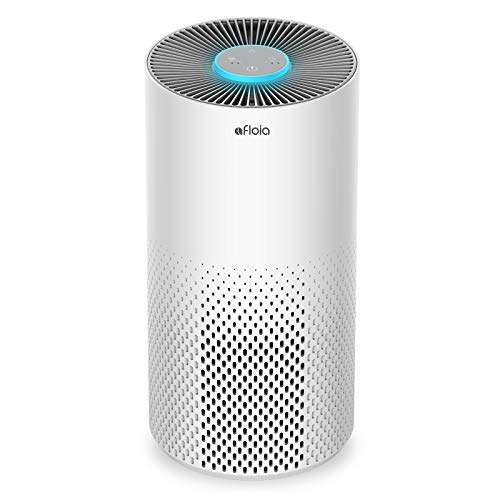
This Afloia model is designed for up to 1,076 square feet and emphasizes quiet operation with 22 dB Sleep Mode. Its 3-stage filtration targets pet dander, dust, pollen, smoke, and odors—common basement pollutants tied to mold growth. The unit also offers optional ambient lighting with seven color choices, which can add a calming atmosphere in a basement living area while maintaining clean air between cleaning cycles.
In basement scenarios, this purifier can serve as a secondary unit in sleeping areas or finished basements where occupants spend extended periods. The low noise level makes it suitable for bedrooms or home offices, while its 3-stage filter helps reduce irritants that can worsen mold-related allergies. Regular maintenance remains important to sustain filtration efficiency in moist environments.
LEVOIT Core300-P, Compact Yet Capable

LEVOIT’s Core300-P emphasizes AHAM Verifide certification and a 143 CFM CADR, delivering strong performance for spaces up to 1,073 square feet. The 3-in-1 original filter offers a recognized filtration approach that captures smoke, dust, and pollen. Sleep Mode and compact dimensions make it suitable for basements that also serve as living or work areas, ensuring quiet operation during evenings and nights.
For mold prevention, consider the Core300-P in combination with moisture control. While this model provides transparent performance metrics and a reliable filter, maintaining a dry environment remains essential to minimize mold growth. The compact size makes placement flexible, from living areas to storage zones in a finished basement.
GermGuardian Large Room Purifier Suite

GermGuardian offers three-layers of protection with a genuine HEPA filter capturing 99.97% of particles as small as 0.1 microns. The optional UV-C light provides an extra line of defense against airborne germs and mold spores while staying ozone-free. The built-in PM2.5 sensor continuously analyzes air quality and adjusts speed accordingly, helping manage mold spores and related odors in basement spaces. This model is designed for larger rooms up to about 743 square feet and can be a robust option when paired with other dehumidification strategies.
Its combination of HEPA filtration and UV-C makes it a solid choice for basements with mold concerns. Sensor-driven auto mode helps respond to fluctuating basement humidity and air quality, reducing manual adjustments. As with all purifiers, optimal placement and regular maintenance are key to sustained performance in damp environments.
GermGuardian 4-In-1 HEPA Air Purifier For Large Rooms

This tower-style purifer uses a true HEPA filter plus UV-C to capture and neutralize common indoor pollutants, including mold spores. It offers a 22″ tall design, optimized for larger rooms and living areas. While it emphasizes odor reduction and comprehensive filtration, users should verify that the unit’s CADR matches the basement size and that the UV-C feature is used according to manufacturer guidelines for safe and effective operation.
For basements dealing with persistent musty odors or visible mold spores, a model like this can be a strong component of an integrated air-quality strategy. Always pair with moisture management to prevent mold from returning after filtration, and monitor replacement schedules to maintain peak performance.
Buying Guide: Key Purchase Considerations For Basement Mold
- Room size and CADR: Choose a purifier with a CADR that matches or exceeds the basement’s area. Larger rooms require higher CADR capabilities to ensure effective air changes per hour.
- Filtration stages: A true HEPA filter (preferably 99.97% at 0.1 microns) plus activated carbon for odors is essential. Dehumidification or moisture control should accompany filtration for mold prevention.
- Sensors and auto mode: PM2.5 or laser-based sensors provide real-time feedback. Auto mode helps the purifier respond to fluctuating air quality without manual adjustments.
- Noise level: Basements used as living spaces or bedrooms benefit from quiet operation. Look for models with Sleep/Quiet modes around 20-30 dB.
- Maintenance: Filter replacement frequency depends on usage, room conditions, and humidity. Favor models with clearly labeled filter replacement intervals and easy filter access.
- Placement strategy: Avoid obstructions near vents or walls. Place purifiers to maximize cross-ventilation and ensure even air distribution across the space.
- Moisture management: A dehumidifier or moisture control plan is critical in basements to minimize mold growth. Air purifiers work best when moisture is managed.
- Energy efficiency: Look for Energy Star or similar certifications to reduce long-term operating costs in a space that’s in use daily.
- Safety and certifications: AHAM Verifide, CARB, and UL listings provide independent performance assurances. UV-C features can aid disinfection but require safe usage guidelines.
In practice, selecting a combination of a high-capacity purifier with strong filtration and a moisture control strategy yields the best results for basement mold management. The listed options provide varied coverage, filtration approaches, and smart features to suit different basement layouts and usage patterns. Always verify current specifications and ensure compatibility with your home’s humidity levels for optimal health benefits.