Best Air Vents for Plumbing: Top Valves to Prevent Sewer Gas
The right air vent plays a crucial role in modern plumbing, allowing drains to vent properly and keeping sewer gases from entering living spaces. This guide focuses on reliable air admittance valves (AAVs) and inline vents designed for residential use. Below, five highly compatible options are reviewed with their key features to help homeowners, remodelers, and DIYers choose confidently. The selections balance code compliance, ease of installation, and long-term durability.
Summary of chosen products
| Product | Brand | Key Benefit |
|---|---|---|
| Oatey Sure-Vent 1-1/2 in.–2 in. 160 DFU | Oatey | Primary vent alternative for DWV systems |
| Oatey 39012 In-Line Vent | Oatey | ABS inline vent helps block sewer gas |
| Studor Redi-Vent AAV | Studor | Compact, ideal for single fixture groups |
| Studor Mini-Vent AAV | Studor | Small footprint, broad adaptability |
| TUUBER 1-1/2 In Vent | TUUBER | Superior seal for reliable venting |
Oatey Sure-Vent 1-1/2 in–2 in Air Admittance Valve

Oatey Sure-Vent 1-1/2 in–2 in. 160 DFU Air Admittance Valve includes a PVC Sch. 40 adapter and serves as an alternative to a secondary vent in a DWV system. It vents up to 160 DFU Branch or 24 DFU Stack, supporting multiple fixtures without exposing homes to sewer gas. The device’s design prioritizes gravity-driven venting, and compatibility with standard PVC plumbing makes it a straightforward installation for renovations or new builds.
Oatey 39012 1.5 in. NPT ABS In-Line Vent
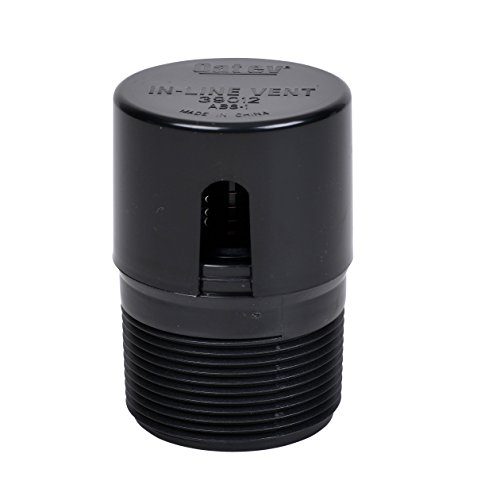
This ABS inline vent is designed to be installed in-line toHelp prevent sewer gas from entering living spaces. It’s spring-loaded to open under negative pressure and close when pressure equalizes, which helps maintain odor control without relying on batteries or external power. Its durable ABS construction supports long-term performance in typical home environments.
Oatey 39016 Air Admittance Valve with PVC Adapter

Oatey’s 39016 AAV combines a Sure-Vent diaphragm with a straight PVC Schedule 40 adapter. It is listed for secondary vent use and provides a robust option for branches up to 3 inches in vent pipe. The unit complies with relevant standards (ASPE/ASSSes) and is commonly chosen for retrofit projects where an additional vent path is needed without extending roof venting.
Studor Redi-Vent Air Admittance Valve

Redi-Vent is a compact AAV solution designed for single fixtures or small fixture groups up to about 20 DFUs on a branch. It uses gravity to close the seal automatically and prevents the return of odors, offering a simple installation path for bathrooms and utility sinks where space is constrained.
Studor Mini-Vent AAV with PVC Adapter

Mini-Vent delivers a compact venting option capable of supporting 160 DFUs on a branch and 24 DFUs on a stack. Its PVC adapter facilitates quick integration into standard vent lines, delivering reliable atmospheric venting while protecting traps from siphoning and odors. It is favored in tight spaces or where fixture spacing is limited.
TUUBER 1-1/2 Inch Vent With Superior Seal

TUUBER’s vent emphasizes a superior sealing mechanism to prevent sewer gas and odors from escaping. It is suitable for venting individual fixtures or as part of a vent stack, offering an option for developers prioritizing enhanced odor containment along with straightforward installation for 1-1/2″ vent lines.
Buying Guide: Key Purchase Considerations
- Vent type: Decide between air admittance valves (AAVs) and inline vents. AAVs are gravity-activated and typically easier to install in tight spaces; inline vents are often used in longer runs or where roof vents are impractical.
- DFU capacity: Ensure the product supports the drain fixture units for your home. Match the estimated DFUs of your bathroom group or kitchen and verify whether the unit vents a branch or stack.
- Code compatibility: Check local building codes regarding AAVs. Some jurisdictions require specific models or restrict their use to particular configurations.
- Material durability: ABS and PVC components offer robust resistance to chemicals and physical wear. ABS is common for inline vents; PVC adapters ease connections with standard piping.
- Ease of installation: Look for units with straightforward adapter options and clear sealing mechanisms. Gravity-driven seals reduce maintenance needs compared with older spring-based models.
- Odor control: AAVs prevent sewer gas from entering living spaces by sealing when pressure normalizes. Inline vents rely on design to prevent backflow of odors, often with spring- or diaphragm-based mechanisms.
- Maintenance and replacement: Consider availability of replacement diaphragms or seals, and whether the device is easily serviceable in place.
- Noise and appearance: Some inline vents and AAVs are quieter and less conspicuous, beneficial for finished basements or visible plumbing runs.
When selecting the best air vent for plumbing, balance the fixture count, space constraints, and local regulations. The reviewed options provide a spectrum from compact single-fixture solutions to larger, more versatile inline vent setups. A properly chosen vent helps maintain trap seals, prevents sewer gas intrusion, and supports efficient drainage in everyday household use.