Best Check Valves for Irrigation Systems
Choosing the right check valve is essential for preventing backflow in irrigation systems and protecting water quality. This guide highlights five reliable options from leading brands, with practical notes on sizing, durability, and installation. Each product is suitable for typical American residential setups and offers durable construction for outdoor use. Use the summary table below to compare quick specs and then read detailed sections for each model.
| Product | Brand | Key Use |
|---|---|---|
| Hunter HC50F50M HCV | Hunter | 1/2-Inch, inline check valve |
| Hunter HC75F75M HCV | Hunter | 3/4-Inch, inline check valve |
| Midline Valve 3/4″ FIP | Midline Valve | Backflow prevention, 3/4″ FIP |
| IPW Industries SMC 6850090 | IPW Industries | Inline poppet check valve for irrigation |
| Eastman Vacuum Breaker | Eastman | Anti-siphon vacuum breaker for hose bib/backflow prevention |
Hunter HC50F50M HCV Check Valve

The Hunter HC50F50M HCV 1/2-Inch Female Inlet by 1/2-Inch Male Outlet Check Valve is designed to protect irrigation lines from backflow. It offers adjustable check height, making installation flexible between the riser and sprinkler head. Built to Schedule 80 specifications, this valve emphasizes durability for outdoor irrigation systems and long-term performance.
Hunter HC75F75M HCV Check Valve
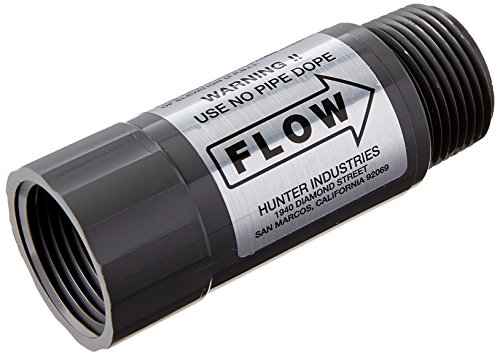
The Hunter HC75F75M HCV 3/4-Inch Female Inlet by 3/4-Inch Male Outlet Check Valve provides a robust solution for larger irrigation lines. Its adjustable height and durable Schedule 80 construction support reliable backflow prevention in mid-sized systems. The valve is compatible with standard irrigation components and helps maintain consistent water pressure across zones.
Hunter HC50F50F HCV Check Valve

This Hunter HC50F50F HCV 1/2-Inch Female Inlet by 1/2-Inch Female Outlet Check Valve focuses on straightforward, compact installation within smaller irrigation lines. It shares the same Schedule 80 durability and reliable one-way flow features, making it a solid choice for tight spaces or low-volume systems where backflow prevention is essential.
Midline Valve 3/4″ FIP Inline Check Valve

This 3/4″ FIP Midline Valve inline check valve is designed for backflow prevention in cold water systems. It features a stainless-steel spring-loaded check and EPDM O-rings to ensure a leak-free seal. It is rated for up to 150 PSI at 73°F and operates between 41°-140°F, making it suitable for typical outdoor irrigation lines in many U.S. climates.
IPW Industries Inline Poppet Check Valve

The IPW Industries inline poppet check valve is designed for home irrigation and water pump systems. Its polypropylene construction resists corrosion and supports clean flow. The valve offers automatic one-way flow and is compatible with typical garden and house plumbing configurations, helping prevent backpressure and backflow into potable water lines.
Eastman Vacuum Breaker Anti-Siphon Hose Bibb

The Eastman 3/4 Inch FHT x 3/4 Inch MHT hose bib anti-siphon vacuum breaker provides backflow prevention for hose connections and hose bibbs. It includes a self-draining mechanism and a break-off screw for permanent installation, making it a practical add-on for outdoor irrigation setups where hose usage is frequent and backflow prevention is required.
Midline Valve 1/2″ Inline Check Valve

This 1/2″ Midline Valve inline check valve offers secure, leak-free solvent connections. It features a stainless steel spring-loaded check to prevent backflow in cold water lines, with a similar pressure and temperature range to other Midline models, making it a versatile option for smaller irrigation networks.
Buying Guide: Key Purchase Considerations
- Valve size and connection type: Match the valve’s inlet/outlet sizes to your irrigation layout (1/2″ vs 3/4″ are common). Consider FIP vs solvent connections based on existing pipe fittings.
- Backflow prevention vs inline check: Inline check valves prevent backflow directly in the line, while vacuum breakers add an anti-siphon layer at hose bibs. Choose based on risk level and system design.
- Durability and material: Schedule 80 components, stainless steel springs, and EPDM O-rings offer greater longevity in outdoor environments. For frequent frost cycles, consider materials rated for low temperatures.
- Installation orientation and height adjustability: Some Hunter models allow height adjustment to optimize flow and seal. Ensure installation accommodates risers, sprinkler heads, and available space.
- Maintenance and reliability: Look for simple disassembly for inspection, minimal calibration required, and compatibility with standard irrigation components.
- Temperature and pressure ratings: Check max PSI and operating temperature ranges to avoid premature failure in hot summers or high-pressure lines.
- Compliance and standards: OEMs often align with ANSI, ISO, and ASTM specs; verify that the model meets local plumbing codes and irrigation standards.
- Warranty and brand support: Reputable brands like Hunter and Midline Valve typically offer warranties and accessible customer support, which helps with installation questions and parts.
- Cost of ownership: Consider not only purchase price but long-term maintenance needs, replacement parts availability, and ease of installation in your landscape layout.