Best Condensate Pump for Mini Split: Top Picks for Quiet, Reliable Drainage
Choosing the right condensate pump for a mini split system ensures reliable drainage, quiet operation, and long-term reliability. The following selections focus on compact, installation-friendly units that handle typical mini split loads, offer safety features, and operate quietly in living spaces. The list provides a mix of compact wall-mounted and ceiling/line-set compatible options to fit various mini split configurations across American homes and offices.
| Product | Brand | Key Strengths |
|---|---|---|
| AQUASTRONG Mini Split Condensate Pump | AQUASTRONG | Automatic safety switch, high flow up to 9.6 GPH, compact mini-split design |
| FUJIWARA Condensate Pump (FUJ—24S) | FUJIWARA | Low noise, 3W power, 24 L/h, 33 ft head, wide voltage 100-220V |
| Knocokie Mini 100-240V Condensate Pump | Knocokie | Ultra-quiet, independent reservoir, 38 L/h flow, 20 m head |
| TURBRO Mini-Split Condensate Pump | TURBRO | 66 ft head, 10.5 GPH, float switch with alarm option, compact |
| WATNOVA Automatic Undermount Mini Split Condensate Pump | WATNOVA | 10 GPH, 37 ft lift, removable reservoir, dual-side installation |
Below are five product sections with practical details to help you decide which condensate pump best fits a mini split installation, including installation notes, noise expectations, and safety features. Each section stays focused on objective specifications and typical use cases.
AQUASTRONG Mini Split Condensate Pump

The AQUASTRONG condensate pump is designed for mini split and related systems, delivering a max flow of 9.6 GPH and a head of up to 33 feet. It features an automatic hall switch to enable auto operation and a safety switch that triggers in case of overflow, ensuring protection for HVAC equipment and living spaces. The unit is engineered for quiet operation—critical in residential settings—and includes easy installation options with anti-vibration strips. Its inlet/outlet sizing supports common condensate tubing, and a removable tank and filter facilitate maintenance. This model is well-suited for AC condensate removal from collector pans in HVAC units, furnaces, and dehumidifiers.
Key specs at a glance: 9.6 GPH max flow; 33 ft max head; 20 dB typical operation; 3/5″ O.D. inlet with 4/5″ I.D. adapter; protection via high-water safety switch; easy wall- or ceiling-mount compatibility. The combination of compact form, safety features, and low-noise performance makes it a solid pick for tight mini split installations where quiet background operation is desired.
FUJIWARA Condensate Pump (FUJ—24S)

FUJIWARA offers a compact mini split condensate pump designed for 1-3 HP systems with a flow rate of 24 L/h and a discharge head of 33 feet. It emphasizes quiet operation—typically under 16 dB—and a low power draw (about 3W). The model employs a plug connection approach, simplifying wiring by separating live, neutral, and signal wires. It’s suitable for HVAC, air conditioners, dehumidifiers, furnaces, and similar equipment requiring automatic drainage. Its slim profile makes it easy to install in line-set covers or above ceilings in tight spaces.
Considerations: 100-240V operation, compact footprint, and a focus on energy efficiency. The device is designed for easy integration into mini splits that require automatic condensate drainage without adding significant noise or bulk to the installation.
Knocokie Mini 100-240V Condensate Pump
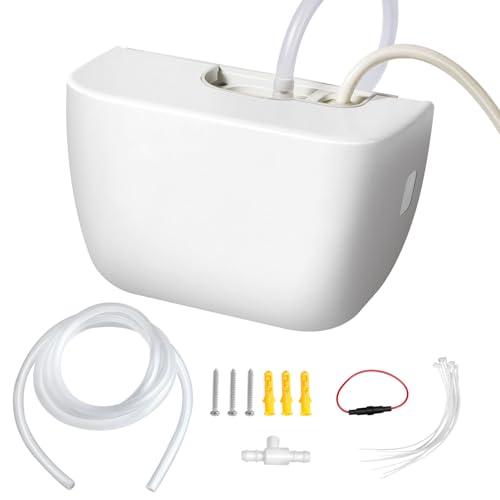
Knocokie’s condensate pump targets mini split and similar indoor units with a micro-split form factor. It features independent pump and reservoir design with a 150 mm length reservoir, and an automatic drainage system with low-noise performance around 19 dB. The pump provides a max flow around 38 L/h and a head up to about 20 meters, making it suitable for smaller mini splits and other equipment requiring automatic condensate removal. Included accessories and simple wiring emphasize quick installation and reliable operation in residential settings.
This model is particularly suitable for installations where space is at a premium and a separate reservoir aids in maintenance and monitoring of condensate levels. It’s compatible with standard 100-240V mains and includes typical tubing connections for common condensate lines.
TURBRO Mini-Split Condensate Pump

TURBRO’s unit is engineered to handle larger condensate loads with a maximum head of 66 feet and a 10.5 GPH flow rate. It includes a safety-focused design with a float switch that starts or stops based on reservoir water level, helping prevent overflow. An alarm option via signal cable improves system protection for occupants and equipment. The compact footprint supports placement in ceilings, line-set covers, or within evaporator units, aligning with common mini split installations where space is constrained but higher head capability is needed for longer drain lines.
This pump balances power and quiet operation, offering robust performance without excessive noise, making it a practical choice for setups requiring more demanding condensate transport in tighter spaces.
WATNOVA Automatic Undermount Mini Split Condensate Pump
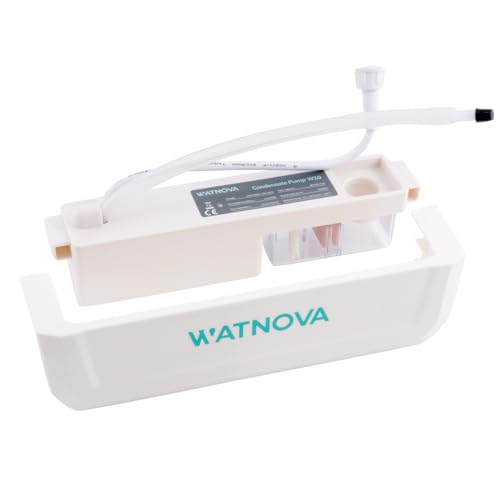
WATNOVA offers an undermount design that integrates with mini split systems, rated for about 10 GPH and 37 ft of lift. This model emphasizes a removable 80 mL reservoir and a large filter for easier cleaning, which helps keep maintenance time minimal and uptime high. The unit supports dual-side installation, enabling flexible mounting in limited spaces. Worldwide voltage compatibility (100-240V) makes it suitable for various home environments. The combination of a removable reservoir and a straightforward filtration setup supports quick servicing and reduced downtime in busy installations.
Buying Guide: Key Considerations For Mini Split Condensate Pumps
- Flow rate and head: Match the GPH and maximum lift to your mini split’s condensate output and the height of the drain line. Higher heads matter for installations with long vertical runs or multiple ceiling passes.
- Noise level: Look for units advertised as 20 dB or lower for bedrooms and living spaces, particularly if the pump operates near occupancy zones.
- Power and voltage: Most mini split pumps use 100-240V input. Consider a model with wide voltage compatibility if the installation location has variable power or is in a region with irregular supply.
- Safety features: Auto shutoff when water is high, float switches, and audible/alarm signals add protection for occupants and equipment. A safety switch can prevent overflow in collector pans and line-set enclosures.
- Installation flexibility: Compact, wall-mounted, undermount, or ceiling-appropriate designs help accommodate different mini split layouts, including line-set covers and evaporator housings.
- Maintenance accessibility: Removable reservoirs and accessible filters reduce downtime during cleaning and service intervals.
- Materials and durability: Corrosion-resistant housings and tubing connections improve long-term reliability in humid environments.
- Compatibility with accessories: Check inlet/outlet sizing (diameters and tubing compatibility) to ensure a smooth connection with common condensate hoses (1/4″ to 1/2″ ID ranges).
- Availability of spare parts: Ensure easy access to replacement pumps, filters, and tubing for ongoing maintenance.
When selecting a condensate pump for a mini split, prioritize compatibility with your system’s capacity, installation space, and noise tolerance. A device with a reliable safety switch and a quiet operating profile can reduce the risk of overflow and minimize disruption in living areas. For installations requiring greater head height or longer drain runs, consider models with higher maximum head and robust construction to sustain consistent performance over time.