Best Dielectric Unions for Water Heaters: Prevent Electrolysis and Extend Piping Life
Finding the right dielectric unions for water heaters helps protect dissimilar metals from galvanic corrosion and leaks. This guide reviews top options designed to separate copper, brass, and steel components while maintaining watertight seals. Each product below features durable materials, reliable connections, and suitability for typical home water-heater installations. Use the buying guide to compare options by size, compatibility, and installation considerations to choose the best match for your system.
| Product | Brand | Size / Connection | Key Benefit |
|---|---|---|---|
| EZ-Fluid Dielectric Union 3/4″ | EZ-FLUID | 3/4″ Sweat x FIP | Prevents galvanic corrosion between copper and steel piping |
| Eastman 20503 Dielectric Union | Eastman | 3/4″ FIP x 3/4″ Solder | Brass body with steel nut; silicone gasket for watertight seal |
| Eastman 20505 Dielectric Union | Eastman | 1″ FIP x 1″ Solder | Durable brass; supports steel, brass, and copper transitions |
| Midline Valve EVGG0034-OM Dielectric Union | Midline Valve | 3/4″ FIP | Reduces electrolysis; brass x steel construction |
| Midline Valve EVGG0012-OM Dielectric Union | Midline Valve | 1/2″ FIP | Brass x stainless steel; secure leak-free connections |
EZ-Fluid Dielectric Union, 3/4 Inch

The EZ-Fluid dielectric union uses a brass solder connection on the pipe side with a female threaded galvanized steel body, designed to connect dissimilar metals and reduce electrolysis. It supports copper-to-steel or galvanized piping and is available in sizes from 1/2″ to 2″. The unit helps maintain a watertight seal while mitigating galvanic corrosion in water heater installations.
Midline Valve EVGG0034-OM Dielectric Union

This 3/4 inch dielectric union features brass-to-steel construction, geared toward reducing electrolysis in water heater systems. It emphasizes safe, leak-free connections suitable for dissimilar metal piping, helping to lower the risk of corrosion and pipe failure in typical residential setups.
Eastman 20503 Dielectric Union
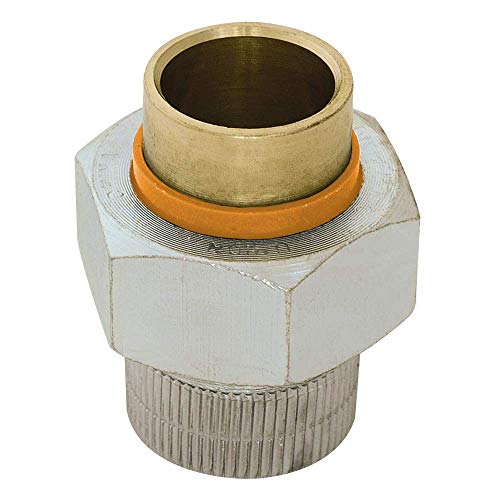
Eastman’s 20503 combines a brass body with a steel nut and a silicone rubber gasket with a nylon insert. It’s designed to handle up to 250 PSI and 180°F, catering to standard water heater inlets and outlets while providing a robust barrier between different metals to prevent corrosion and leaks.
Eastman 60095 Dielectric Nipple

Eastman’s dielectric nipple is designed for water heater inlet and outlet hook-ups where dissimilar metals occur. It features a Teflon lining to resist corrosion and provide a fluid-tight seal, improving long-term durability in mixed-metal piping environments.
Eastman 20505 Dielectric Union

This 1-inch dielectric union is built to minimize corrosion with brass construction. It supports steel and copper transitions and is rated for up to 250 PSI at temperatures up to 180°F, making it a versatile choice for various water heater configurations.
Midline Valve EVGG0012-OM Dielectric Union
With a 1/2 inch FIP connection, this support brass-to-stainless steel dielectric union reduces electrolysis and provides secure leak-free connections for smaller diameter runs. It’s a practical option for compact or tight installations in water heater lines.
Dielectric fittings: factors to consider
When selecting dielectric unions for a water heater, consider metal compatibility (copper-to-steel, brass-to-steel, etc.), connection type (solder, FIP, or sweat), and the warranty or brand reliability. Temperature and pressure ratings are essential for ensuring long-term performance in typical residential water systems, and a silicone or Teflon lining can influence material compatibility and seal longevity. Some unions also include galvanic barriers or liners to further reduce corrosion risk.
Installation considerations
Installation should ensure a clean, dry connection surface and proper alignment to avoid cross-threading or leaks. Soldered connections require proper heating and flux usage, while threaded unions must be tightened to the recommended torque to prevent leaks. If you’re replacing an existing dielectric union, verify that the new size matches the pipe and fittings’ specifications and that the system is depressurized before work begins.
Durability and maintenance
Durability hinges on material choice (brass, steel, stainless steel), gasket quality, and the ability to withstand local water chemistry. Periodic inspection for signs of corrosion, leaks, or gasket wear can prevent water damage and expensive repairs. In some installations, dielectric unions with high-temperature ratings offer better performance under hot-water conditions.
Buying considerations and comparisons
- Size and connection type: Choose based on existing piping (FIP, sweat/solder, or combination) and the required diameter for your water heater lines.
- Material compatibility: Brass bodies with steel nuts typically balance durability and corrosion resistance; stainless options may be preferred in highly corrosive waters.
- Temperature and pressure rating: Ensure the unit can handle typical home water heater loads (commonly up to 180°F and 250 PSI or more).
- Ease of installation: Consider whether soldered or threaded connections align with your capabilities and tools.
- Warranty and brand reliability: Opt for established brands with positive service histories to support long-term performance.