Best Duct Fans for HVAC: Top Inline and Booster Fans for Efficient Ventilation
Choosing the right duct fan can improve air exchange, reduce heat buildup, and help maintain humidity and odor control in living spaces, grow rooms, and basements. The following picks are popular inline and booster fans that pair well with standard 4”, 6”, and 8” ductwork. This guide highlights performance, noise levels, and energy efficiency to help American homeowners compare options for HVAC ventilation, bathroom exhaust, grow tents, and general airflow improvement.
| Product | Brand | Airflow (CFM) | Size | Key Benefit |
|---|---|---|---|---|
| VIVOSUN Inline Booster Duct Fan 6” | VIVOSUN | 275 | 6 in | Adjustable speed; low noise |
| VIVOSUN 6 Inch Inline Duct Fan 240 CFM | VIVOSUN | 240 | 6 in | Compact, quiet operation |
| VIVOSUN 8 Inch Inline Duct Fan 420 CFM | VIVOSUN | 420 | 8 in | Higher airflow for larger spaces |
| Hon&Guan 6 Inch Inline Booster Duct Fan | Hon&Guan | 345 | 6 in | Energy efficient; low noise |
| iPower 6 Inch 240 CFM Inline Duct Fan | iPower | 240 | 6 in | Quiet and durable |
Product choices above emphasize duct compatibility, noise control, and dependable motors. Whether you’re ventilating a grow tent, bathroom, kitchen, or basement, these fans can be paired with standard ductwork to boost airflow and manage odor and humidity. This article covers five top options and ends with a practical buying guide to help compare features such as speed control, power consumption, and installation considerations.
VIVOSUN Inline Booster Duct Fan 6” 275 CFM

This 6-inch booster fan from VIVOSUN combines a durable steel housing with a permanently lubricated motor. The integrated speed controller on the power cord lets users tailor airflow between low and high settings without replacing parts. With a 6-inch diameter, the unit delivers up to 275 CFM at 3120 RPM, suitable for mid-sized duct runs in basements, bathrooms, or attics. Quiet operation is aided by a design that reduces vibrational noise while maintaining steady airflow. The compact profile makes it adaptable to tight spaces behind panels or in utility closets.
Features to note include maintenance-free bearings and a robust build designed for continuous use. Depending on duct length and bends, this model can help manage heat buildup in grow tents or exhaust stale air efficiently. The speed controller provides flexibility for different environments, from odor control in kitchens to humidity management in bathrooms. For users prioritizing reliability with moderate airflow, this option is a strong fit.
VIVOSUN 6 Inch Inline Duct Fan 240 CFM

Designed for compact spaces, this VIVOSUN 6-inch inline fan delivers 240 CFM at 2960 RPM. Its lightweight and compact form makes installation easier in tight basements, attics, or grow tents where space is at a premium. The fan is engineered with a permanently lubricated bearing for quiet operation and low maintenance, while the balanced centrifugal impeller contributes to longer service life. Noise level remains a consideration, typically under moderate decibel levels to minimize disruption in living areas or workspaces.
Users benefit from its straightforward integration with common duct sizes and simple mounting options. This model emphasizes efficiency for mid-range ventilation tasks, such as exhausting moisture after showers, venting heat from small grow tents, or refreshing air in kitchens lacking proper cross-ventilation. It’s a practical choice for homeowners seeking a dependable, low-profile solution.
VIVOSUN 8 Inch Inline Duct Fan 420 CFM

For larger spaces, the VIVOSUN 8-inch model delivers 420 CFM at 2970 RPM. This higher airflow is beneficial in bigger basements, multi-room basements or larger grow tents where robust exhaust is required. It retains the same design language—durable construction, permanently lubricated bearings, and a balanced centrifugal impeller—resulting in dependable performance with relatively low noise for its class. The compact 8-inch form still allows flexible placement in closets or utility rooms behind panels.
The unit’s energy profile aligns with standard inline fans in its class, making it suitable for continuous operation in spaces needing sustained airflow. Installation considerations include ensuring adequate duct length and minimal sharp bends to preserve rated CFM. Users seeking a powerful, yet reasonably quiet solution for medium-to-large spaces will find this model aligns well with HVAC exhaust or heat management criteria.
Hon&Guan 6 Inch Inline Booster Duct Fan

Hon&Guan’s 6-inch booster fan emphasizes energy efficiency with a 19.2W motor delivering up to 345 CFM at 3300 RPM. Its design targets quick, quiet venting in spaces such as grow rooms, bathrooms, and kitchens where odor control and ventilation are essential. The unit uses a DC motor and a lightweight plastic blade assembly for easy maintenance and installation. Users enjoy a balance between airflow and low energy consumption, which is beneficial in setups requiring sustained operation without a large power draw.
Applications span multiple environments, including basements and attics, where boosting air exchange is necessary to prevent moisture buildup. While the fan is compact, it does not sacrifice efficiency, offering a practical solution for retrofits or new ducting projects. For those prioritizing energy-conscious performance with moderate airflow, this model provides a compelling option.
iPower 6 Inch Inline Duct Fan 240 CFM

The iPower 6-inch inline fan aims for efficient yet quiet operation with 240 CFM at 2950 RPM. It’s designed for easy installation in tight spaces and includes a 5.5-foot grounded power cord for convenience. The motor features a permanently lubricated bearing, offering low maintenance and long life. A well-balanced centrifugal impeller minimizes turbulence, contributing to a more comfortable noise profile during operation. This model suits hobbyist grow tents, bathrooms, and kitchens where compact size and reliability matter.
Key considerations include ensuring compatibility with existing ducting and verifying that the noise level remains acceptable for the room’s use. The product is positioned for users who value straightforward setup and consistent airflow without extensive electrical work. It’s a reliable choice for single-room ventilation tasks in homes or small studios.
Hon&Guan 4 Inch Inline Booster Duct Fan
This 4-inch booster from Hon&Guan is designed for compact areas needing a modest boost: 130 CFM at 4500 RPM with a 6W power draw. The emphasis is on low energy consumption and quick setup for small grow spaces, bathrooms, attics, or kitchens. The blade and body use high-quality plastic for easy maintenance and replacement. It is suited for shorter duct runs or where space constraints limit larger fans, providing a straightforward solution for targeted ventilation tasks.
Considerations for this model include the balance between airflow and space constraints. While it won’t replace larger fans in bigger rooms, it excels in smaller, retrofit projects or zones that require occasional boost rather than continuous, high-volume exhaust. For users prioritizing minimal power usage and compact design, this option is a practical fit.
VIVOSUN D4 4 Inch 195 CFM Inline Duct Ventilation Fan
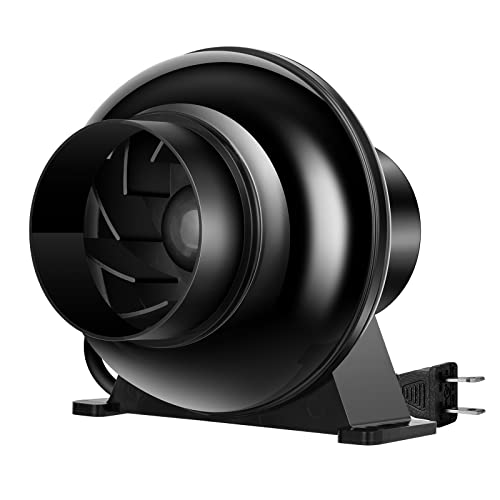
The VIVOSUN D4 model provides 195 CFM at 2500 RPM, targeting grow tents, heat transfer, and air quality management. It operates at a notably quiet level thanks to a design that reduces turbulence and noise. TheETL-listed motor includes automatic reset protection to prevent overheating, contributing to safety for longer-term use. The unit’s junction box uses flame-retardant components for additional protection in spaces like garages or basements.
This fan is well-suited for controlled environments where consistent airflow supports humidity and temperature management. The compact 4-inch footprint makes it easy to install in limited spaces behind panels or inside utility rooms. For growers or homeowners focused on reliable performance with safety features, this model offers a balanced option.
Buying Guide: Key Purchase Considerations For HVAC Duct Fans
When selecting a duct fan for HVAC needs, consider airflow requirements, noise tolerance, and energy usage. For smaller rooms or grow tents, models around 240–275 CFM at 6 inches may provide adequate exhaust without excessive power draw. For larger spaces, 420 CFM at 8 inches offers greater room-to-room exchange, especially when combined with longer duct runs.
- Airflow and speed control: Look for fans with adjustable speed or variable controllers to match room size and venting needs. Faster isn’t always better if it causes noise or energy waste.
- Noise level: A lower decibel rating improves comfort in living areas and workspaces. Balanced impellers and isolation mounting can help reduce sound.
- Power efficiency: Fans with permanently lubricated bearings and efficient DC motors save energy and extend life. Check wattage relative to CFM for long-term cost efficiency.
- Installation fit: Confirm duct size compatibility (4”, 6”, 8”). Consider space behind panels, under cabinets, or in closets where clearance varies.
- Safety and reliability: ETL listings, flame-retardant components, and automatic reset protections enhance safety in busy spaces like basements and garages.
- Durability: Metal housings offer sturdiness for long-term use; plastic bodies can be lighter and easier to install in tight spots but may wear sooner in demanding environments.
- Maintenance: Permanently lubricated bearings reduce maintenance; check access for cleaning and filter checks if applicable.
Bottom line: choose a model whose CFM aligns with room size and duct length, while prioritizing energy efficiency and noise control. For grow tents and hydroponics, higher airflow with controlled noise is desirable. For bathrooms or kitchens, a quieter model with steady exhaust is typically preferred. Always verify compatibility with existing ductwork and mounting options before finalizing a purchase.