Best Roof Exhaust Fans for Attics and Rooftops
Choosing the right roof exhaust fan helps regulate attic temperatures, improve ventilation, and protect roofing, insulation, and living spaces. This guide highlights five reliable attic and roof fans, comparing airflow, build quality, and control features to fit American homes and varying climates.
| Product | Brand | Key Benefit |
|---|---|---|
| Master Flow ERV6BL | Master Flow | High airflow (up to 1,500 CFM) for large spaces |
| Master Flow PT6 | Master Flow | Efficient operation with thermostat control |
| FICBXRA Roof Extractor | FICBXRA | Strong 171 CFM with durable metal housing |
| HG Power 10″ Shutter Fan | HG Power | 647 CFM with low noise and mesh screen |
| iLiving HYBRID Solar Roof Fan | iLiving | Smart thermostat, solar assist, up to 2,900 sq ft cooling |
These selections cover high-capacity roof vents, easy installations, weather-resistant construction, and modern controls. Review the sections below to compare each option and identify the best fit for attic ventilation and roof-mounted exhaust needs.
Master Flow ERV6BL Gable Roof Attic Fan

The ERV6BL model from Master Flow is designed to ventilate attics up to 2,800 square feet, helping reduce heat buildup and improve overall home comfort. It includes a built-in thermostat/humidistat that helps regulate cooling needs based on conditions, supporting energy efficiency and consistent attic airflow. With a galvanized steel construction, this unit offers durability for rooftop or gable mounting and a built-in screen to deter debris ingress. The fan delivers up to 1,500 CFM, making it suitable for larger attic spaces seeking robust exhaust performance.
Master Flow PT6 1000 CFM Roof Mount Attic Vent Fan

The PT6 model from Master Flow focuses on efficient exhaust with a 1,000 CFM capacity. It emphasizes energy-conscious operation and durable galvanized steel construction. The built-in thermostat helps optimize cooling needs while protecting roofing and attic spaces by maintaining proper ventilation levels. The PT6 is designed for straightforward installation and reliable long-term performance in residential roof-mounted installations.
FICBXRA Roof Extractor Fan 171 CFM
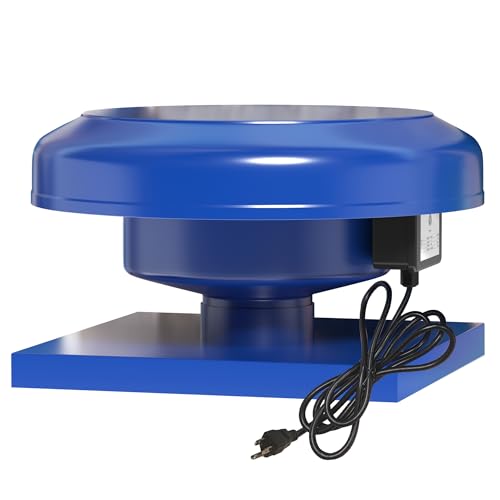
FICBXRA’s Roof Extractor Fan delivers 171 CFM with a compact footprint suitable for smaller attic or greenhouse applications. The unit features a metal shell with corrosion-resistant construction and NSK/SKF bearings for longevity, plus a weather-resistant hood and built-in bird screen. It operates with low noise thanks to its single-phase external rotor motor design, offering a practical option where space or mounting constraints exist.
HG Power 10 Inch Shutter Exhaust Fan

The HG Power 10-inch unit offers a high airflow of 647 CFM with a low-noise profile and a robust steel mesh screen for debris protection. It uses a thicker build with upgraded motor components for longer service life and reliability in garage, shed, or attic environments. The included mesh screen provides an extra line of defense against pests while maintaining strong exhaust performance in roof-mounted or wall-lantern installations.
iLiving HYBRID Ready Solar Roof Attic Exhaust Fan

The iLiving HYBRID Ready model combines solar-assisted operation with smart thermostat control for energy-efficient attic ventilation. The 14″ fan delivers up to 1,150 CFM of airflow and is designed to cool spaces up to 2,900 square feet. A built-in thermostat with enable/disable features, IP68 waterproof motor, and adjustable solar panel angles enhance versatility for roof installations. The 40-watt solar option can reduce energy use during sunny periods while preserving attic temperatures.
Buying Guide: Key Considerations For Roof Exhaust Fans
When selecting a roof exhaust fan for attic or rooftop ventilation, consider capacity, installation, and durability to ensure long-term performance.
- Airflow needs: Measure attic size and desired venting rate (CFM) to select a model that moves enough air for effective cooling and moisture control. Higher CFM is beneficial for larger spaces, while smaller areas benefit from energy-efficient, moderate airflow.
- Mounting suitability: Roof-mounted vs. gable-end or wall-mounted installations affect airflow dynamics and ease of installation. Galvanized steel and durable housings support harsh weather conditions.
- Controls and sensors: Thermostats, humidistats, and smart controllers optimize operation. Solar-assisted or hybrid options can reduce electrical consumption in sunny climates.
- Durability and weather protection: Look for weatherproof housings, corrosion-resistant materials, and screens to deter debris and pests.
- Noise levels: Fans designed for quiet operation minimize disruption in living spaces, particularly in residential settings.
- Maintenance: Access, replaceable bearings, and filter or screen options affect long-term serviceability and performance.
- Warranty and support: Brand reputation and warranty terms offer peace of mind for attic ventilation systems.
Across these options, users should balance airflow capacity with energy considerations, mounting compatibility, and local climate factors to achieve optimal attic ventilation without unnecessary energy use.