Best Roof Vent Fans for Attic Cooling and Ventilation
Keep attics, garages, and rooftops cooler with purpose-built vent fans. This guide showcases five top-rated roof vent fans with features ranging from thermostat control and high airflow to energy-saving designs and solar-powered operation. Each option includes key specs to help you compare performance, durability, and installation needs.
| Product | Brand | Key Feature |
|---|---|---|
| Master Flow ERV6BL | Master Flow | Up to 1,500 CFM, built-in HT1 thermostat/humidistat |
| Master Flow PT6 | Master Flow | Energy-efficient, galvanized steel, up to 1,000 CFM |
| MAXXAIR 00-06401K | MAXXAIR | 4-speed exhaust with rain cover and manual opening |
| Cool Attic CX1500 | Cool Attic | Up to 1,850 sq ft cooling with thermostat control |
| Solar Attic Fan DC HOUSE | DC HOUSE | Solar-powered, 1,600 CFM, weatherproof |
Choosing the right roof vent fan involves considering airflow needs, climate, installation constraints, and energy use. The following sections detail five robust options that address a range of attic and rooftop ventilation scenarios, from traditional wired models with thermostats to solar-powered solutions.
Master Flow GAF 1500 CFM Powered Roof Mount Attic Fan

The ERV6BL from Master Flow delivers high airflow for attic spaces up to 2,800 square feet. It includes a built-in HT1 thermostat/humidistat to optimize cooling when needed, which helps reduce energy costs. A galvanized steel construction with durable components supports long-term use, and the unit integrates with standard attic vent configurations. This model targets larger spaces where consistent exhaust is essential for reducing heat buildup and humidity. Consider installation location, electrical access, and compatibility with existing roof framing when planning installation.
Master Flow GAF 1000 CFM Power Roof Mount Attic Vent Fan

This 1,000 CFM attic vent is designed for efficiency and ease of installation. With galvanized steel construction, it emphasizes durability and weather resistance. The unit’s thermostat-based control helps match ventilation to attic temperature, providing energy savings and improved comfort in spaces up to about 1,600 square feet. Its lower power draw compared with higher-CFM models can be advantageous for smaller or retrofit installations. When selecting, compare attic size, existing ductwork, and mounting options to ensure a proper fit.
MAXXAIR Maxxfan Deluxe Vent

The Maxxfan Deluxe combines a four-speed exhaust fan, rain cover, and built-in thermostat with a manual opening feature. This model is designed for 14″ x 14″ roof openings and can operate with gravity-assisted or powered ventilation modes. It is suitable for users who want precise speed control across varying outdoor conditions, as well as protection from rain during operation. The integrated components are designed to simplify installation and maintenance, while the weather-resistant enclosure supports long-term use in exposed roof locations.
Cool Attic CX1500 Gable Mount Attic Ventilator
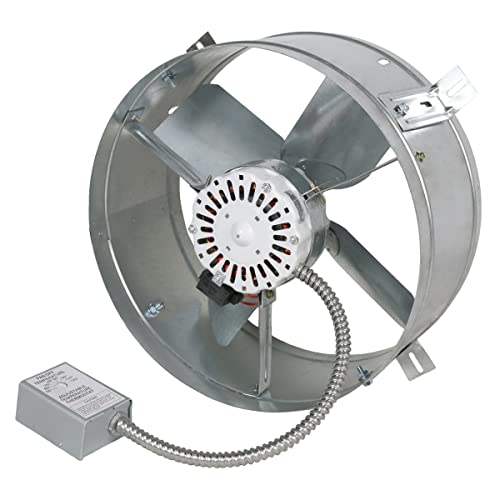
The CX1500 is designed to move air efficiently in larger attic spaces up to 1,850 square feet. It includes thermostat-controlled operation to maintain comfortable attic temperatures and reduce HVAC strain. The design emphasizes quiet operation for minimal household disruption and reliable performance across a range of climates. When planning installation, assess roof structure, access for wiring, and compatibility with existing vent openings to ensure optimal airflow and longevity.
Solar Attic Fan 32W 1600CFM By DC HOUSE
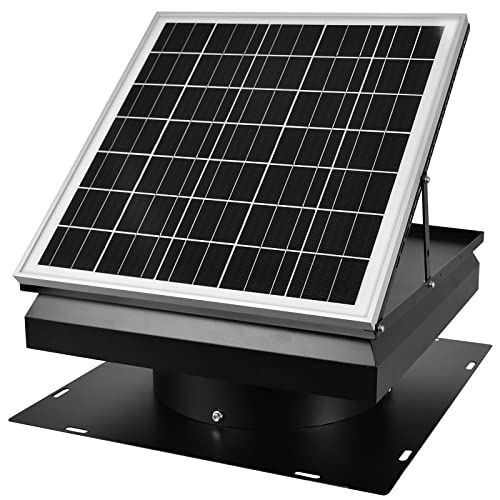
This solar-powered attic vent operates off-grid, offering 1,600 CFM without electrical wiring. It automatically activates with sunrise and shuts down at dusk, delivering hands-off climate control suitable for sunny climates or areas with reliable sun exposure. The unit is weatherproof and designed for rooftop installation on homes, garages, sheds, and other structures. It pairs well with existing passive vents for enhanced whole-building airflow, especially in solar-ready setups where electrical access is limited.
Buying Guide: Key Considerations For Roof Vent Fans
When selecting a roof vent fan, evaluate airflow needs, attic size, climate, and installation requirements. Here are practical criteria and comparisons to help you choose:
- Airflow capacity (CFM): Larger spaces require higher CFM. Compare attic volume and target air exchanges per hour to avoid under- or over-ventilation.
- Thermostat and humidity controls: Models with built-in thermostats or humidistats automatically adjust exhaust based on temperature and humidity, improving energy efficiency.
- Power source: Traditional wired fans rely on home wiring and breakers. Solar-powered options deliver off-grid operation but depend on sun exposure and weather.
- Construction and durability: Galvanized steel and aluminum blades offer corrosion resistance and long service life, essential for rooftop exposure.
- Weather protection: Rain covers, backdraft dampers, and bug/bird screens help prevent water intrusion and pests while maintaining airflow.
- Installation footprint: Check mounting style (gable, roof, or wall-mounted) and opening dimensions to ensure a compatible fit with existing roof structures.
- Noise levels: Some systems run quietly, which is important for living spaces near attic access. Look for decibel ratings if noise is a concern.
- Energy efficiency: Compare energy use (watts and amps) and anticipated impact on cooling loads to determine long-term value.
- Maintenance: Consider access for blade cleaning, motor lubrication, and filter or screen maintenance to sustain performance over time.
- Compatibility with existing systems: If integrating with an HVAC system or passive vents, ensure compatible control strategies and wiring.
In summary, select a model that aligns with your attic size, climate, and installation constraints. For larger spaces, high-CFM, thermostat-equipped options such as the Master Flow ERV6BL provide robust control. For retrofit projects with limited electrical access, solar solutions like the DC HOUSE model offer off-grid operation. For mixed-use applications or spaces with frequent weather changes, the MAXXAIR and Cool Attic designs provide flexible airflow control and weather defenses. Always verify installation requirements and local building codes before purchasing.