Best Gas Heaters for Camper: Safe, Portable Warmth for Your RV Adventures
Camping season calls for reliable warmth that’s safe in small spaces. This guide highlights five top gas heaters suitable for campers and RVs, focusing on indoor safety, portability, and efficient heating. Each option includes key specs to help you compare coverage, runtime, and safety features.
| Product | BTU / Heating Area | Key Safety Features | Portability | Notes |
|---|---|---|---|---|
| Mr. Heater F215100 Little Buddy | 3,800 BTU | ODS, tip-over protection | Ultra-light | Enclosed spaces up to 95 sq ft |
| Mr. Heater Portable Buddy Radiant | 4,000 or 9,000 BTU | Piezo ignition, automatic shut-off | Compact, travel-friendly | Heats up to ~225 sq ft |
| ProCom ML100TBAHR | 10,000 BTU | Thermostat control | Wall-mount option | Ventless blue flame |
| ThermoMate PHF18B | 18,000 BTU | ODS & tip-over protection | Portable with casters | Heats up to 450 sq ft |
| Dyna-Glo IR30PMDG-1 | 6,000–30,000 BTU | Infrared radiative heat | Wall/stand options | Up to 1,000 sq ft |
Mr. Heater F215100 Little Buddy: Compact Indoor Safe Heater
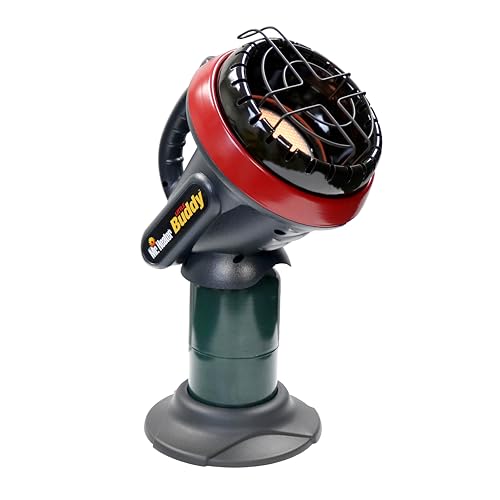
The Mr. Heater F215100 Little Buddy delivers 3,800 BTU per hour, offering a focused radiant heat angle ideal for small camper setups. It is designed for indoor use with safety systems that include an automatic low oxygen shut-off (ODS) and a tip-over protection feature, reducing risk in enclosed spaces. The unit operates with simple on/off controls and provides a runtime of about 5.6 hours on a 1-pound cylinder (cylinder not included). Its compact profile makes it a popular option for campers who prioritize portability without sacrificing warmth in tight spaces.
Mr. Heater Portable Buddy Radiant Heater

This versatile heater can emit 4,000 or 9,000 BTU per hour of radiant heat, offering flexibility for different climate conditions. It is designed for both indoor and outdoor use and can warm spaces up to roughly 225 square feet. The Portable Buddy is known for its rugged construction and reliable performance, making it a staple for campers who need rapid warmth and easy transport between settings. Consider its fuel consumption and venting needs based on your RV’s layout and ventilation.
ProCom ML100TBAHR Ventless Blue Flame Heater

The ProCom ML100TBAHR operates on liquid propane gas and features a blue flame, ventless design, and a thermostat that cycles the burner to maintain a desired room temperature. This 10,000 BTU heater is capable of heating larger camper spaces up to about 300 square feet. It is a practical option for those who want steady warmth with automatic temperature regulation, though users should ensure adequate ventilation in enclosed campers to maintain air quality and oxygen levels.
ThermoMate PHF18B Propane Heater

The ThermoMate PHF18B offers 18,000 BTU of heating output and includes ODS and tip-over protection for safer operation inside an RV. Capable of heating up to 450 square feet, this heater is suitable for larger campers or when extra warmth is needed during cooler nights. Its portability is enhanced by a compact design that can be moved between storage and living areas, while multiple heating modes (6000/12000/18000 BTU) help tailor comfort and fuel consumption.
Dyna-Glo IR30PMDG-1 Infrared Wall Heater

The Dyna-Glo IR30PMDG-1 uses infrared radiation to heat objects and surrounding air, delivering a flexible 6,000–30,000 BTU range. This infrared vent-free wall heater can cover up to 1,000 square feet, making it suitable for larger campers or open-concept layouts. With infrared heat, occupants feel warmth more quickly, and the wall-mount option helps free floor space. Ensure proper clearance and venting compatibility when mounting in small RV interiors.
Buying Guide: Key Considerations For Camper Heating
- Heater type and space coverage — Match BTU output to your camper’s square footage. RVs typically benefit from 3,800–18,000 BTU units for bedrooms or living areas, while larger campers may require higher outputs or infrared designs for quick warmth.
- Ventilation and safety — Indoor propane heaters require proper ventilation and oxygen safety measures. Look for ODS, tip-over protection, and automatic shut-off features. Ventless options demand careful placement away from sleeping areas and drafts.
- Fuel type and availability — Propane is common for campers, but check cylinder availability, storage, and portability. Some units rely on fixed gas lines or require external hoses and regulators; inspect compatibility with your RV setup.
- Portability and installation — Consider whether you want a compact portable model or a wall-mounted unit to save space. Weight, handle design, and mounting hardware influence ease of use on the road.
- Thermostat control and climate management — Thermostatic control helps maintain a consistent temperature, reducing fuel usage and preventing overheating. Models with multi-mode settings offer flexible comfort levels.
- Maintenance and safety checks — Regularly inspect hoses, regulators, and ODS components. Follow manufacturer guidelines for safe operation in confined spaces and during travel vibrations.
- Noise, fumes, and air quality — Some blue-flame or infrared heaters produce noticeable fumes or fan noise. Choose models designed for enclosed spaces and consider air-quality precautions like CO detectors.
- Energy efficiency vs. heat distribution — Infrared heaters heat objects and people directly, which can feel warmer at lower BTU. For even room warmth, consider convection or radiant options in combination with proper insulation.
- Repairability and replacement parts — Favor brands with widely available replacement parts and service support. This reduces downtime on extended trips.
For camper users, the right gas heater balances safety, warmth, and travel practicality. The options listed here span compact portable designs to higher-output units, offering choices across different RV sizes and typical camping conditions. Always follow the manufacturer’s safety guidelines and verify that your chosen heater is compatible with your camper’s ventilation, propane supply, and space constraints.