Best Car Sound Insulation for Quiet Rides and Better Comfort
Choosing the right sound insulation for your vehicle can dramatically reduce road noise, engine hum, and wind intrusion. The following selections focus on closed-cell foams, butyl-based dampeners, and foil-faced mats that resist moisture and heat transfer. Each entry includes features that matter for car cabins, such as heat resistance, waterproofing, and ease of installation. This guide helps you compare options across coverage, thickness, and performance to suit different budgets and vehicle types.
| Product | Brand | Approx. Coverage |
|---|---|---|
| Siless Liner 157 mil (4 mm) 36 sqft | Siless | 36 sqft |
| KOIKEY Car Sound Deadening Material Mat | KOIKEY | 8.72 ft² |
| KILMAT 80 mil 36 sqft | KILMAT | 36 sqft |
| uxcell 394mil 10mm 16.36sqft | uxcell | 16.36 sqft |
| ALLWIN Car Heat Sound Deadening Mat | ALLWIN | 10.8 sqft |
Siless Liner 157 Mil (4 Mm) 36 Sqft

Closed cell polyethylene foam with an adhesive layer offers excellent thermal barrier and moisture resistance. The Siless liner blocks radiant heat transfer by up to 98% and provides notable vibration dampening. It is lightweight, waterproof, and flexible for easy installation with or without a roller. This option balances cost with performance, suitable for moderate to larger cabin upgrades and areas like doors or floors.
KOIKEY Car Sound Deadening Material Mat

The KOIKEY mat uses closed-cell PE foam with waterproof adhesive. With a thickness of 5 mm (197 mil), it delivers strong sound deadening and heat insulation for trucks and passenger vehicles. It blocks a large portion of radiant heat, cools the cabin, and helps reduce fuel usage by improving air conditioning efficiency. The packaging provides multiple pieces to cover irregular surfaces and mix with other dampening products.
KILMAT 80 Mil 36 Sqft

This automotive self-adhesive butyl and foil mat emphasizes thickness for higher performance, claiming better sound dampening as a direct result of the 80 mil layer. It is easy to install for DIY enthusiasts and provides good vibration control, with a focus on achieving greater attenuation as more layers are added. The mat is relatively lightweight, making it suitable for a broad range of vehicles.
BXI Double Noise Blocker Foam

This egg-crate foam paired with a rubber layer provides double thermal and noise insulation. The combination is designed to absorb sound while dissipating vibrational energy, delivering robust transmission loss. It’s a practical option for HVAC ducts, pipes, or other flat panels where both heat and noise reduction are needed, offering a balanced approach for layered noise control strategies.
uxcell 394mil 10mm 16.36sqft Mat
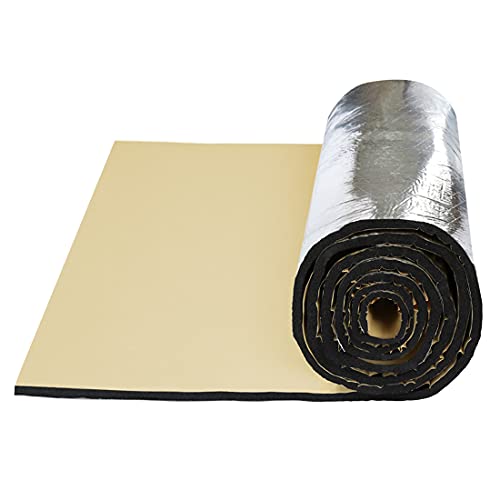
Designed to reduce engine and road noise, this 10 mm thick aluminum foil foam mat offers heat shielding and sound damping. The material blocks sunlight and heat transfer to help stabilize cabin temperature, contributing to lower fuel use for climate control. It is suitable for larger engine compartments and components where heat transfer can significantly impact comfort.
Buying Guide: Key Considerations For Sound Insulation Upgrades
- Material type and performance: Foam, butyl, and foil-faced mats each offer different balance points between heat resistance, moisture tolerance, and acoustic damping. Closed-cell foam and butyl-based mats typically provide higher dampening per thickness than standard foams.
- Thickness and coverage: Thicker mats generally deliver better noise reduction, but require more space and can be heavier. Assess vehicle area to cover (doors, floor, trunk, engine bay) and choose a combination that achieves desired silence without overloading panels.
- Heat and moisture resistance: Foil-faced and moisture-proof foams help deter moisture intrusion and radiant heat, improving cabin comfort in hot or humid climates. If your climate is milder, standard dampening may suffice.
- Adhesion and installation: Self-adhesive options simplify DIY installation. Ensure surface preparation is thorough to maximize bond strength and longevity. Consider using rollers for a flat, gap-free finish.
- Thermal considerations: Some products also contribute to climate control savings by reducing heat transfer into the cabin, which can lower AC load and fuel consumption in extreme temperatures.
- Compatibility and weight: Heavier, higher-density products may affect vehicle weight and handling slightly. Distribute weight evenly and follow manufacturer guidelines for best results.
- Sound coverage strategy: For best results, target problem areas first—doors, floors, wheel wells, and the trunk/ceiling—then expand as needed. Layering different materials can improve overall attenuation.