Best Kerosene Heaters for Indoor Use: Safe, Reliable Warmth for Homes and More
Kerosene heaters offer portable warmth for spaces where electricity is limited or unavailable. This article highlights five dependable models well-suited for indoor use, focusing on heat output, safety features, fuel efficiency, and practical considerations. Each product section provides a quick overview, key specs, and real-world suitability to help you compare options for living areas, workshops, or emergency heating.
Quick reference: Selected products at a glance
| Product | Brand | BTU | Approx. Area | Notes |
|---|---|---|---|---|
| Dyna-Glo WK95C8 | Dyna-Glo | 23,800 | Up to 1,000 sq ft | No electricity needed |
| Sengoku KeroHeat White | KeroHeat | 23,500 | Up to 900 sq ft | |
| InoKraft 80,000 BTU | InoKraft | 80,000 | Up to 2,000 sq ft | |
| Dyna-Glo RMC-55R7 | Dyna-Glo | 10,000 | Up to 500 sq ft | |
| Hengriacly 11,000 BTU | Hengriacly | 11,000 | 20-30 sq m (~215-323 sq ft) |
Dyna-Glo Indoor Kerosene Convection Heater WK95C8

The Dyna-Glo WK95C8 is a convection heater rated around 23,800 BTU, designed to heat spaces up to about 1,000 square feet. It operates without electricity, making it suitable for areas prone to outages or remote workshops. With a focus on fuel efficiency and steady heat distribution, this model emphasizes reliable warmth with minimal power dependence. Suitable environments include living rooms, basements, and larger dens where steady, electricity-free warmth is desired.
Sengoku KeroHeat Indoor & Outdoor Heater White – 23,500 BTU

The Sengoku KeroHeat model delivers 23,500 BTU with a heating capacity suitable for up to 900 square feet. It’s described as portable for indoor and outdoor use, and it includes a sizable 1.9-gallon tank for extended operation—up to roughly 12 hours on a full fill. Features such as push-to-start ignition, automatic safety shut-off, and a compact form factor make it a practical option for garages, basements, or outdoor-adjacent spaces that still require indoor warmth during power outages.
InoKraft 80,000 BTU Kerosene Forced Air Heater

The InoKraft 80,000 BTU unit is built for larger spaces, delivering rapid warmth to areas up to 2,000 square feet. Its 5-gallon fuel tank provides up to about 8.5 hours of continuous heat. The heater is CSA certified and includes safety features such as overheat protection. It’s designed for garages, workshops, barns, and job sites where robust, fuel-based warmth is needed and electrical power may be unavailable.
Dyna-Glo RMC-55R7 Indoor Kerosene Radiant Heater

The Dyna-Glo RMC-55R7 provides 10,000 BTU of radiant heat to warm spaces up to 500 square feet without relying on electricity. This model emphasizes compact, domestic use with a focus on consistent radiant warmth in smaller rooms or primary spaces like family rooms and studios. Its compact design makes it a flexible option for apartments or cottages where a small, dependable heat source is beneficial during colder periods.
Hengriacly 11,000 BTU Kerosene Heater
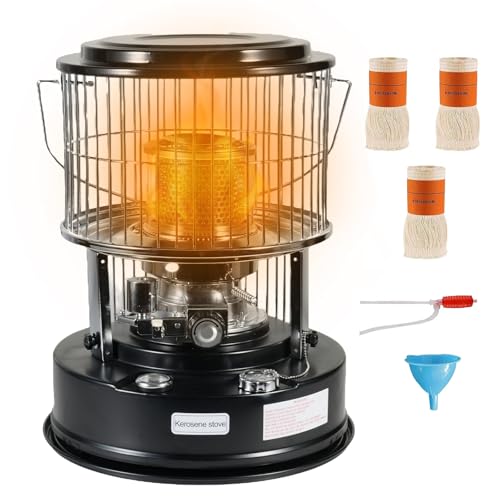
The Hengriacly kerosene heater delivers up to 11,000 BTU with a focus on safety and portability. It features auto tip-over shut-off, a flame regulator, and a protective grill. The stated heat range covers roughly 20-30 square meters, translating to about 215-323 square feet. It’s positioned as a practical option for rapid, supplemental heat, emergency preparedness, or camping scenarios where power may be inconsistent.
Sengoku Indoor & Outdoor Kerosene Heater Black – 23,500 BTU

This Sengoku model offers 23,500 BTU for spaces up to about 1,000 square feet, emphasizing cordless operation and portability for indoor and outdoor use. It includes safety features like automatic shut-off, a tip-over switch, and protective grills to support safe operation in offices, garages, or living areas where robust warmth is needed without electrical dependence.
Buying Guide: What to consider when choosing a kerosene heater for indoor use
- Heat output and space: Match BTU ratings to the size of the room. A higher BTU heater heats larger spaces more quickly but may use more fuel. For typical living spaces, options around 10,000–23,500 BTU cover most needs.
- Fuel capacity and runtime: Larger tanks translate to longer runtimes between fills, reducing maintenance. Consider how long you need warmth without regular refueling, especially in outages.
- Safety features: Automatic shut-off for tip-overs, flame regulators, and protective grills are critical for indoor use. CSA or other certifications offer additional assurance of safety standards.
- Electrical independence: Models marketed as no-electricity-needed are valuable during outages but verify that ancillary components (fans, igniters) align with your usage expectations.
- Mobility and placement: Portable units with wheels or compact radiants work well in apartments, garages, or basements. Ensure adequate ventilation and follow local regulations on indoor kerosene heating.
- Fuel type and availability: Most kerosene heaters use standard refined kerosene No. 1 or No. 2. Availability varies by region; consider future fuel accessibility and storage.
- Ventilation and safety planning: Always operate kerosene heaters in well-ventilated areas, away from flammable materials, and with a functional carbon monoxide detector in living spaces tied to the heater’s operation.
- Maintenance: Regular wick inspection and replacement, fuel quality, and proper cleaning extend heater life and reliability. Follow manufacturer guidelines for maintenance intervals.
- Durability and CSA certification: For extended, frequent use, prioritize units with solid build quality and third-party safety certifications for peace of mind.
- Emergency readiness: In power outages, kerosene heaters can be part of an emergency kit. Consider models with a reliable start mechanism and minimal reliance on electricity.
These considerations help balance warmth, safety, and practicality. When selecting a kerosene heater for indoor use, prioritize credible safety features, appropriate heat output for your space, and a fuel plan that aligns with your lifestyle or emergency preparedness goals. Always follow the manufacturer’s guidelines and local regulations to ensure safe operation and indoor air quality.