Best Low Profile RV Air Conditioners for Off-Grid Comfort
Choosing a low profile RV air conditioner helps maximize space and maintain comfort on the road. This guide features five compact, roof-mounted units designed for trailers, campers, and motorhomes, including options with heat pumps, Wi‑Fi control, and battery-friendly operation. Each selection balances efficiency, durability, and quiet performance for off-grid adventures and mid‑season trips.
| Product | BTU / Capacity | Key Benefit | Power/Connectivity |
|---|---|---|---|
| RV Air Conditioner by Outequip | 10,000 BTU | Low profile, quick cooling | 12V battery powered option |
| OutEquip Pro 10K BTU (12V) | 10,000 BTU | Off‑grid capable with extended runtime | Battery powered |
| TOSOT 16K GoCool | 16,000 BTU cooling / 12,500 BTU heating | Smart Wi‑Fi control for larger spaces | Wi‑Fi app control |
| 12V RV Air Conditioner (Whtoufou) | 15,000 BTU cooling / heating | High cooling with efficient 12V system | Inverter rated, 12V operation |
| FOGATTI InstaCool 13.5K | 13,500 BTU | All‑in‑one design, quick install | 115V AC with DC power connection |
Best Low Profile 10K BTU RV AC From Outequip

The 10,000 BTU model from Outequip provides efficient cooling suitable for compact RV interiors. It claims rapid cooling, capable of bringing down cabin temperatures quickly, with the option of a built‑in 4,500 BTU PTC heater for mild-weather warmth. The unit uses UV‑stabilized ABS housing, an EPDM foam gasket, and a zinc‑coated condenser, designed to resist weather and road conditions. This balance of performance and ruggedness makes it a practical choice for travelers seeking a low‑profile rooftop unit that handles variable climates.
OutEquip Pro 12V 10K BTU RV AC (W/O Heater)
This 12V, 10,000 BTU unit focuses on off‑grid compatibility, offering extended cooling when parked with a suitable battery setup. It shares a durable, weather‑ready shell with UV‑stabilized materials and robust gaskets, designed for steady performance in dusty or humid climates. Battery‑powered operation can enable climate control without a generator, assuming appropriate solar or storage capacity. It’s well suited for users who prioritize independent power management while maintaining RV comfort.
TOSOT 16K GoCool RV A/C With Heat Pump

The TOSOT GoCool unit pairs a high cooling capacity with a built‑in heat pump and smart control. It supports RV spaces up to around 600 square feet and provides both cooling (16,000 BTU) and heating (12,500 BTU). The Wi‑Fi integration via the Gree+ app allows remote adjustments, and the unit tolerates a wide outdoor temperature range, making it adaptable to diverse travel destinations. This option suits larger RVs where a connected, climate‑responsive system is desired.
12V RV Air Conditioner With Heating (Whtoufou)
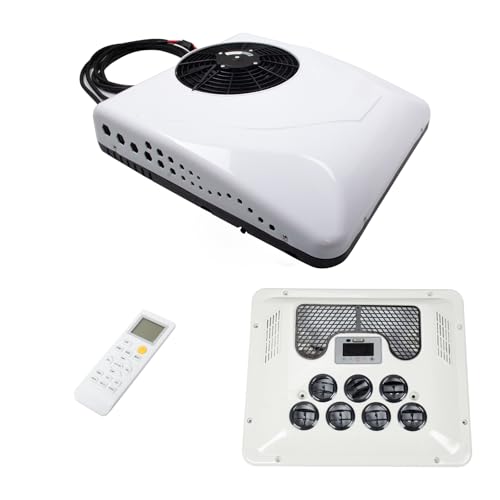
This 12V unit delivers up to 15,000 BTU of cooling with heating support, combining a 12V inverter system for energy efficiency. It’s designed for off‑grid setups where both solar and battery storage are used. The model emphasizes a compact roof footprint and a balance between airflow and quiet operation, making it suitable for mid‑sized RVs or vans that require reliable year‑round climate control without heavy electrical demands.
Furrion Chill Cube 18K RV Rooftop A/C

The Furrion Chill Cube 18K is a high‑efficiency rooftop unit with variable speed compressors that deliver stronger airflow and faster cooling. It’s designed to be compact enough for easier installation while offering substantial cooling capacity for larger RVs or heat‑heavy climates. The unit emphasizes quiet operation and energy efficiency, with an emphasis on immersive comfort during extended stays in warm environments.
RecPro 13.5K BTU Low Amp RV A/C

RecPro’s 13.5K BTU low‑amp model emphasizes off‑grid suitability with a low electrical draw. The rugged, UV‑resistant housing helps withstand road travel, while the low profile design reduces drag on roof lines. Ultra‑quiet operation (around 47 dB) makes it one of the quieter options for sleeping or working inside a campground RV. It also supports heating, providing a balanced climate solution for variable seasons.
Buying Guide: Key Considerations For Choosing A Low Profile RV A/C
Rooftop Footprint And Compatibility
Measure your RV roof and confirm the unit’s weight, width, and mounting pattern. Low profile models are designed to minimize drag, but you must ensure clearance for vents and skylights. Check if the unit is non‑ducted or ducted and whether your RV’s roof can support a particular height and profile.
Cooling And Heating Capacity
Choose BTU ratings aligned with your RV size. Larger campers benefit from higher BTU ranges, while smaller trailers may prioritize efficiency and quieter operation. Some units include heat pumps for year‑round comfort; consider your climate and travel season when selecting heating capabilities.
Power Source And Efficiency
Many units offer 12V or battery‑powered operation for off‑grid use, while others require 115V AC power, with solar or generator support. Inverter systems and smart control features can reduce battery drain and optimize cooling performance, extending runtime between charges.
Durability And Weather Resistance
Look for UV‑stabilized housings, gasket quality, and corrosion‑resistant condensers. Units designed for harsh weather and rough roads will maintain performance longer, particularly for frequent travelers or off‑grid adventures.
Smart Controls And Connectivity
Wi‑Fi or app control provides convenient management from inside or remotely. Smart thermostats and programmable schedules help balance comfort with energy consumption, especially when paired with solar setups or limited battery capacity.
Installation And Service
Consider whether installation is a DIY project or requires professional help. Some units emphasize easier bolt‑on installation, but you should verify compatibility with your RV model and whether required components (like condensers, wiring, or adapters) are included or sold separately.
Noise Levels
Quieter models range from roughly 45 dB to mid‑40s, which can significantly impact comfort during sleep. If you use the RV for rest, prioritize models marketed as quiet or ultra‑quiet to minimize disruption inside the cabin and in campsites.
Budget And Longevity
While price is a factor, longevity and reliability are essential for long trips. Review build materials, warranty options, and brand support. A slightly higher upfront cost can translate into fewer service calls and better performance over time.