Best Mechanical Ventilation Systems for Homes That Improve Indoor Air Quality
Choosing the right mechanical ventilation system can dramatically improve indoor air quality, comfort, and energy efficiency in American homes. This article reviews five top options, highlighting features, performance, and installation considerations to help you compare models for your space. Each entry includes key specs, ideal use cases, and practical guidance for assessing fit with your home’s layout and climate.
| Product | Brand | Approximate CFM | Notable Feature |
|---|---|---|---|
| Broan B210E75RS | Broan-NuTone | 206 | Energy Recovery Ventilator with self-balancing ERV core |
| Weiworld Through the Wall Vent | Weiworld | Variable (multi-stage) | Smart control via WiFi/Remote |
| Tjernlund V2D Underaire | Tjernlund | 220 | Moisture reduction for crawlspaces |
| Abestorm Crawlspace Vent Fan | Abestorm | 220 | Humidistat & Freeze Protection |
| Quini 512M 6-Inch Exhaust Fan | Quini | 80 | Retractable duct for wall installations |
Broan B210E75RS ERV: Balanced Air and Freshness

The Broan B210E75RS is a wall- or ceiling-mounted energy recovery ventilator designed to temper and filter incoming outdoor air while exhausting stale indoor air. It features VIRTUO technology for airflow verification and auto-balancing, simplifying installation and ongoing performance. At 206 CFM, it is well suited for mid-size homes seeking steady, balanced ventilation without complex manual balancing. This unit improves indoor air quality by continuously exchanging air while preserving comfort and energy efficiency. Installation requires consideration of ducting, electrical supply, and space for the ERV core.
Weiworld Wall Vent With Smart Control
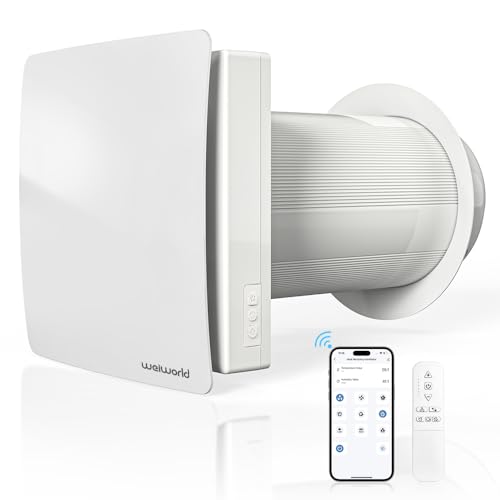
The Weiworld through-the-wall ventilation unit emphasizes smart control and flexible operation. It supports WiFi and remote control via an app or included remote, enabling real-time adjustments to fan speed and air-flow modes. It offers multiple operating modes—Fresh Air Intake, Exhaust, and Air Recirculation—to tailor ventilation to seasonal needs and occupancy. The filtration stack includes multiple layers (G4 pre-filter, HEPA, and activated carbon) to reduce dust, odors, and pollutants, sustaining cleaner indoor air even with outdoor variability. Installation is typically straightforward for standard wall openings, with attention to wall thickness and duct routing.
Tjernlund V2D Underaire Crawlspace Ventilator

The Tjernlund V2D Underaire is designed to improve crawlspace conditions by actively ventilating through existing passive vents. With a 220 CFM rating and a compact face plate suited for standard foundation openings, this unit helps reduce moisture buildup and humidity that contribute to mold risk. The 40-watt, maintenance-free exhaust operation emphasizes a low-profile, durable approach suitable for homes with crawlspaces requiring reliable air movement without heavy electrical demands. Consider integration with other HVAC components and the overall moisture management strategy of the space.
RLOZUI 8-Inch Exhaust Fan For General Ventilation

The RLOZUI 8-inch exhaust fan is a versatile, wall- or ceiling-mounted option designed for bathrooms, kitchens, attics, and basements. It emphasizes durability with metal construction, anti-corrosion surfaces, and an automatic closing valve to prevent back-draft and ingress of insects or debris. The unit uses a brushless motor with dual ball bearings to support quiet, efficient operation. While not a dedicated ERV or heat-recovery unit, it serves as a robust, high-CFM exhaust solution within a larger ventilation strategy that may include makeup air and filtration stages elsewhere in the home.
Abestorm Crawlspace Ventilation With Humidistat

The Abestorm crawlspace vent combines 220 CFM airflow with a built-in humidistat and freeze protection thermostat, providing responsive humidity control in damp environments. The aluminum-zinc shell offers durability in challenging temperature ranges, making it suitable for crawlspaces and basements that experience seasonal humidity fluctuations. A durable motor and quiet operation help ensure this unit can run without being disruptive. When paired with a central HVAC plan, the humidistat helps maintain healthier crawlspace conditions and reduces mold risk for overlying living spaces.
Quini 512M: Flexible 6-Inch Exhaust

The Quini 512M is a through-wall exhaust fan with a 6-inch duct, offering 80 CFM and low noise (4.0 sones). Its retractable duct design supports adjustable wall installations, making it a versatile option for spaces requiring temporary or adjustable ventilation without major remodeling. The unit’s copper windings and robust outer wall construction contribute to a longer service life and reliability in residential settings. It is best used as part of a broader ventilation strategy that includes makeup air and filtration for overall air quality management.
Buying Guide: Key Considerations For Selecting Home Ventilation
- Purpose and space: Assess whether you need whole-home ventilation (ERV/HRV), targeted exhaust, or crawlspace-specific solutions. Large houses benefit from whole-home systems, while smaller homes or retrofit projects may rely on room exhaust fans and selective ventilation.
- Airflow and pressure: Match CFM to the size of the space and the level of air exchange required. Oversized units can create drafts and energy waste; undersized units may fail to reduce pollutants effectively.
- Filtration: Consider filtration stages (pre-filter, HEPA, activated carbon) to remove particulates and odors. Filtration performance is especially important in urban areas or homes with allergy concerns.
- Energy recovery: ERVs and HRVs help temper incoming air using energy exchange with exhaust air. This feature improves comfort and reduces heating or cooling load, particularly in extreme climates.
- Installation and integration: Some units are wall- or ceiling-mounted, others are crawlspace or through-the-wall types. Verify clearances, duct routing, electrical requirements, and compatibility with existing HVAC equipment.
- Smart controls and monitoring: WiFi-enabled or remote-controlled models offer adjustable schedules and real-time status, aiding maintenance and energy management.
- Noise and maintenance: Check decibel levels and accessible service points. Quiet operation is important for bedrooms and living spaces, while easy maintenance lowers long-term costs.
- Durability and warranty: Look for corrosion resistance, robust motors, and warranties that cover critical components like the ERV core or fans.
- Local climate and humidity: In humid environments, dehumidification features or integrated moisture control can be valuable to prevent mold and condensation.
- Cost and energy efficiency: While prices vary, consider long-term energy savings from energy recovery and smart scheduling rather than upfront costs alone.
In summary, selecting the right mechanical ventilation system depends on the home layout, climate conditions, and how much you value automation and filtration. The options above illustrate a range of approaches—from balanced ERVs with smart control to crawlspace-focused solutions—that can fit different retrofit scenarios and new constructions. Always verify installation requirements and consult a qualified HVAC professional to determine the best match for your home.