Best Portable Exhaust Fans for Bathroom: Quiet, Efficient Ventilation Options
When moisture and odors linger in bathrooms, a reliable exhaust or ventilation solution is essential. The following selections focus on portable or easy-to-install options that can help remove humidity, reduce odors, and keep bathroom air fresh. Each product offers different strengths—from humidity sensing to compact desk-style units—that suit apartments, small baths, or retrofit setups. Use this guide to compare features, noise levels, and energy use while considering how the unit will fit your space and wiring capabilities.
Summary Table of Selected Products
| Product | Brand | Type | Key Benefit | Link |
|---|---|---|---|---|
| Fanspex 6″ Bathroom Exhaust Fan With Front Panel | Fanspex | Exhaust Fan | Low noise, front panel for easy cleaning | Link in article |
| 3 Speed Bathroom Exhaust Fan with Humidity Sensor | ARSFAN | Humidity-Sensing Exhaust | Auto ventilation based on humidity | Link in article |
| Vornado TRANSOM Window Fan | Vornado | Window Exhaust/Intake | Reversible exhaust mode, remote control | Link in article |
| Huilynsen Air Mover Blower Fan | Huilynsen | Portable Air Mover | Three-speed blower with safety features | Link in article |
| Breetee Portable Range Hood | Breetee | Portable Kitchen Hood | No-duct, triple filtration for odors | Link in article |
Huilynsen Air Mover Blower Fan — Portable Exhaust and Drying Ally

The Huilynsen Air Mover Blower Fan functions as a compact, portable option for drying and exhausting in small spaces. It features three speeds to regulate airflow across floors, ceilings, or work surfaces. An adjustable 185-degree blowing angle lets you direct air toward damp corners, basements, or bathrooms where moisture tends to linger. The unit is designed for home, shop, or job-site use and includes a circuit breaker with a reset button for added safety. A long power cord with a grounded plug helps ensure safe operation in bathrooms where outlets are accessible. This versatility makes it a practical choice when you need a flexible, movable ventilator that isn’t tied to a fixed duct system.
When used in bathroom settings, ensure the unit is kept away from water splashes and operated on a dry area or with a splash guard. While it can significantly increase air movement, it should not replace a dedicated bathroom exhaust fan in fully enclosed, permanently moisture-heavy spaces. Use it to supplement existing ventilation or to dry surfaces after showers, painting, or cleaning tasks. The 3-prong grounded plug provides an added layer of safety, aligning with general electrical guidelines for bathroom use in many homes.
Fanspex 6″ Bathroom Exhaust Fan With Front Panel

This Fanspex model focuses on quiet, efficient bathroom ventilation with a front protective panel that protects against splashes while remaining easy to clean. The full-screen front panel helps prevent moisture and dust intrusion, and the unit ships with a five-foot cord and on/off switch for straightforward operation. At 39 dB of noise, this exhaust fan is designed for low disruption while continuously exchanging indoor air. With a 110 CFM airflow rating and a modest 17W power draw, it’s suitable for most standard bathrooms ranging up to 75–108 square feet. The combination of low energy use and relatively quiet operation makes it a practical pick for apartments or homes that require a compact, discreet exhaust solution.
Consider this model if you want a straightforward replacement for an existing bathroom vent or if you lack ductwork and need a surface-mounted fan that can be installed in a window, wall, or ceiling with relative ease. The 5-foot cord reduces the need for additional wiring work, which can simplify retrofits. In environments with high humidity, pairing this unit with a humidity-sensing option in the same bathroom space can further optimize moisture control and reduce condensation on mirrors and tiles.
3 Speed Bathroom Exhaust Fan With Humidity Sensor
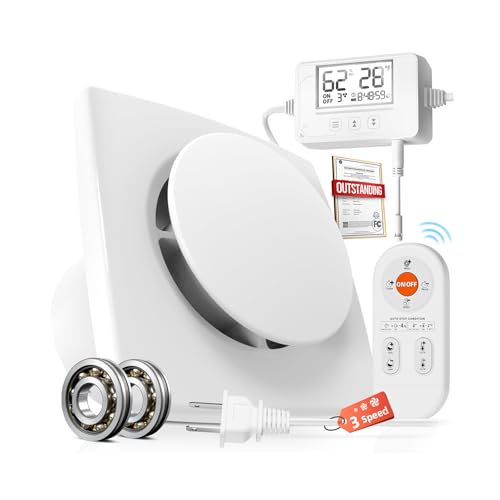
This ARSFAN unit adds automatic humidity-based ventilation to the bathroom. A high-precision humidity sensor can trigger the fan when moisture rises, helping prevent foggy mirrors and damp surfaces. The device sits in the 85 CFM range with a motor that spins at 1450–2600 RPM, delivering robust airflow without excessive noise (about 24–35 dB). A 100% copper dual-ball AC motor provides durability and reliable performance across temperature fluctuations typical of bathrooms. The filter-agnostic, straightforward design makes installation easier for average homeowners, particularly when retrofitting older bathrooms that lack a dedicated exhaust line. This model combines automatic control with quiet operation for continuous moisture management.
Key considerations include where to place the fan for optimal moisture extraction and whether you have an appropriate outlet nearby. Humidity-sensing functionality can reduce the need to manually adjust the fan, but ensure regular cleaning of sensors and vents to maintain accuracy. The copper motor is a plus for longevity, though it may come at a slightly higher upfront cost compared with basic exhaust fans. This unit is well-suited for bathrooms that frequently experience higher humidity, such as those used by multiple occupants or those without continuous ventilation.
Vornado TRANSOM Window Fan With Four Speeds
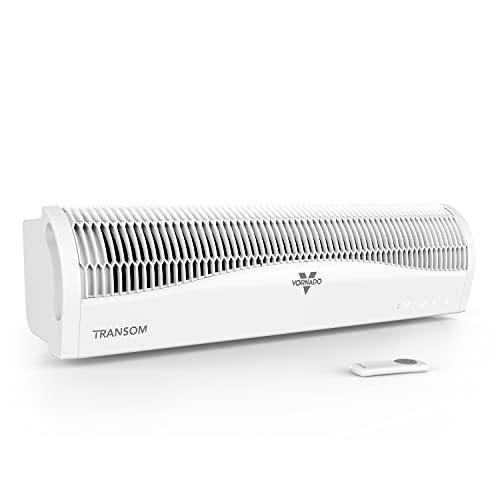
The Vornado TRANSOM Window Fan provides flexible, whole-room ventilation with a four-speed control that occupants can tailor to their needs. It’s designed to fit standard window dimensions and uses an electronically reversible chamber to switch between intake and exhaust modes with a single button. This makes it a strong option for bathrooms where you want to pull fresh air in during dry conditions or push out humid air when showering. The low-profile design integrates into most window frames without extensive modifications. The reversible feature allows you to optimize airflow across the room, potentially drawing in cooler outdoor air while venting indoor moisture out during peak humidity periods. Remote control adds user convenience, particularly in shared bathrooms where reachability matters.
When using a window fan in a bathroom, consider weather sealing and potential noise transmission to adjacent rooms. While window units aren’t ducted, they can still deliver significant benefits by enabling cross-ventilation. The weather-resistant case helps protect components from humidity and temperature swings, but ensure the unit is properly secured within the window to avoid wobble or drafty gaps. For bathrooms without a suitable exterior vent path, this option gives an effective alternative to ceiling fans while keeping installation non-permanent.
Breetee Portable Range Hood — Compact Exhaust With Dual Filters

The Breetee portable range hood is a compact, plug-and-play option designed for smoke, odors, and grease removal in compact cooking spaces, RVs, or indoor cooking areas. While primarily marketed for kitchens, the unit’s portability and filtration system can be relevant for bathrooms that double as spa areas or small apartments where odors may accumulate quickly. The design emphasizes no installation or duct work, with a 70-inch power cord enabling flexible placement. The triple filtration system—two carbon filters plus a polymer layer with an aluminum core—helps capture airborne odors and particulates more effectively than simple exhaust fans. For bathrooms that double as spray areas or where chemical cleaners are used near the sink or shower, this can be a supplementary solution to improve air quality during and after use.
Important considerations include ensuring the hood remains clear of steam at high humidity levels, which could affect performance over time. Since this is not a dedicated bathroom exhaust solution, it should be viewed as an adjunct to a primary exhaust or ventilation strategy. Its portability is a clear advantage for renters or spaces where fixed ducting is not possible, but it should be used as part of a broader approach to moisture control and odor management in small bathrooms.
Buying Guide: How To Choose The Right Portable Bathroom Exhaust Solution
- Ventilation needs: Determine bathroom size and typical humidity levels. Small, enclosed baths often benefit from 80–110 CFM exhausts, while larger bathrooms may require more robust airflow or dual-fan setups for better circulation.
- Noise tolerance: For spaces like bedrooms or shared living areas, select models labeled with lower decibel ratings. Quiet operation improves comfort during morning routines or nighttime use.
- Humidity sensing vs. manual control: Humidity sensors automate ventilation and can prevent fogged mirrors and damp surfaces. If you prefer hands-on control, choose a model with multiple speed settings and a straightforward on/off switch.
- Power and wiring: Consider existing outlets, GFCI protection near bathrooms, and whether a unit requires ducting. Window-mounted or portable fans generally need less invasive installation than ceiling or wall-mounted exhausts.
- Durability and materials: Look for copper motors for longevity, splash resistance on front panels, and sealed enclosures that resist moisture. Cleanability of the front panel matters for bathroom hygiene.
- Placement flexibility: Portable or compact units offer greatest flexibility in apartments or rented spaces where permanent installation isn’t feasible. For fixed setups, ensure anchoring and sealing prevent drafts and heat transfer.
- Filtration and odor control: If odors from cleaning products or bathroom products are a concern, filtration (or adding a carbon filter) can help. For multi-use spaces, layering ventilation with filtration may improve air quality.
In summary, selecting a portable bathroom exhaust solution should balance airflow capacity, noise, ease of installation, and how often the unit will be moved or repositioned. Humidity-sensing models simplify maintenance in high-use bathrooms, while window and portable options offer flexible retrofits where ductwork is limited. For comprehensive moisture control, consider pairing a portable unit with an additional exhaust fan or improving overall bathroom ventilation through structural upgrades when feasible.