Best Rooftop Air Conditioning Unit for Campers and RVs
Planning reliable cooling for a camper, trailer, or RV hinges on choosing a rooftop AC unit that delivers strong performance, energy efficiency, and straightforward installation. The following picks reflect a range of BTU capacities, heat options, smart controls, and quiet operation to keep your travels comfortable in varying climates. This guide compares five top units to help you select the right fit for your off-grid adventures and on-road comfort.
| Product | BTU / Heating | Key Benefit | Approx. Link |
|---|---|---|---|
| Outequip RV Air Conditioner | 10,000 BTU cooling, 4,500 BTU heater | Fast cooling, compact heater for mild days, weather‑resistant build | RV Air Conditioner, 12V, battery powered |
| TOSOT 16,000 BTU Go Cool | 16,000 BTU cooling, 12,500 BTU heating | Smart WiFi control, suitable for larger RVs | Go Cool camper rooftop AC |
| Furrion Chill Cube 18k BTU | 18,000 BTU cooling, high efficiency | Variable speed, lightweight, powerful performance | AC unit only, ducted option |
| FOGATTI InstaCool 13,500 BTU | 13,500 BTU, dual compressors | Fast cooling, eco-friendly refrigerant, easy install | All-in-one design for campers |
| TURBRO RV Air Conditioner 15,000 BTU | 15,000 BTU cooling, 1,500W heating | Quiet operation, app & remote control | Non-ducted rooftop unit |
Note: All units are rooftop-mounted options suitable for RVs, campers, trailers, and motorhomes. Wiring, electrical compatibility, and roof dimensions vary by model; consult each product page for installation requirements and safety guidelines before purchasing.
Outequip 10K BTU Rooftop RV Air Conditioner

This compact rooftop unit delivers quick cooling in RVs, trucks, vans, and campers. It features a 10,000 BTU cooling capacity that can noticeably reduce interior temperatures within minutes, helping to create a comfortable cabin after a day on the road. A built-in 4,500 BTU PTC heater provides supplemental warmth for mild days and transitional seasons, though it should not substitute a primary heat source in very cold conditions. The unit emphasizes durability with UV-stabilized ABS plastics, an EPDM foam gasket, and a zinc-coated condenser to endure outdoor use and exposure to elements.
Key considerations include the 12V operation compatibility, potential need for a compatible battery and inverter setup in off-grid scenarios, and ensuring roof clearance and mounting provisions align with your camper’s roof structure. The unit’s weather-resistant design helps it hold up under exposure to sun, rain, and wind during long trips.
TOSOT 16,000 BTU Go Cool RV Rooftop AC

The TOSOT GoCool system targets larger RVs with a 16,000 BTU cooling capacity and a 12,500 BTU heating option, capable of maintaining comfort in spaces up to around 600 square feet. Its standout feature is smart WiFi control via the Gree+ app, enabling users to adjust temperature, fan speed, and modes from a smartphone. The unit’s operating range supports harsh outdoor conditions, with performance across a broad temperature spectrum to keep interior temps steady. A user-friendly setup and remote monitoring enhance convenience during travel or at campsites where climate control matters most.
Considerations include ensuring proper ducting (if applicable), power requirements for higher BTU loads, and whether the installed unit supports your preferred control ecosystem. For off-grid trips, confirm battery and inverter capacity can sustain longer cooling cycles during peak heat.
Furrion Chill Cube 18K RV Rooftop AC (Black)

The Furrion Chill Cube 18K rooftop unit emphasizes high capacity and energy efficiency with a variable speed compressor system. This design helps move cool air more effectively inside the RV and can deliver over one ton of cooling power, making it suitable for campervans and smaller travel trailers that require robust performance without excessive energy draw. The unit is sold as AC unit only, with compatible installation kits and ducting typically required separately. Its lightweight construction supports easier handling during installation and removal for maintenance or off-season storage.
When evaluating this option, assess roof weight constraints, compatibility with your existing ventilation layout, and whether you’ll pair it with ducted or non-ducted configurations. The variable speed technology can help conserve battery life on longer trips when paired with efficient power management.
Furrion Chill Cube 18K RV Rooftop AC (White)

This is the white version of the same high-capacity Furrion Chill Cube model, offering identical cooling performance and energy efficiency in a lighter color option. It shares the same advantages of variable speed compressors for enhanced air movement and quicker cooling. The unit remains an AC unit only purchase, requiring compatible installation components and ducting as part of a complete system. For owners seeking a cohesive white exterior with matching interior aesthetics, this variant aligns with visual preferences while preserving technical capabilities.
Key considerations include ensuring you have the correct mounting hardware kit and confirming roof clearance. Evaluate your RV’s electrical system capacity, and plan for potential wiring upgrades if you’re expanding cooling capacity beyond factory specs.
FOGATTI InstaCool 13,500 BTU RV Rooftop AC
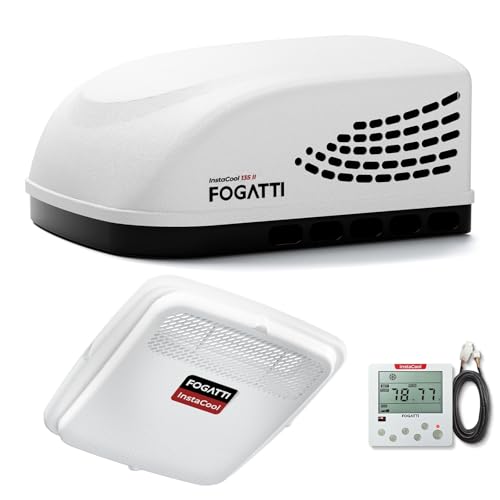
The FOGATTI InstaCool combines a compact, all-in-one design with efficient cooling using 13,500 BTU and dual high-efficiency compressors. The dual-compressor setup aims to provide faster chill times while maintaining energy efficiency with R32 refrigerant. The installation is designed to be straightforward, with a note that the unit is part of a broader system requiring other installation components for full operation. Eco-friendly refrigerant and smart balance between cooling capacity and power usage are central to its appeal for campers seeking reliable performance without excessive power draw.
When selecting this model, confirm your roof’s available space, the need for a compatible ADB kit, and whether you’ll rely on shore power or a battery-based system. Since this is an all-in-one design, check for integrated controls and compatibility with your preferred smart accessories if available.
TURBRO 15,000 BTU RV Rooftop AC

The TURBRO unit delivers 15,000 BTU of cooling with 1,500W electric heating, making it suitable for year-round use. It features a quiet operation level, with noise as low as 52 dB, and supports remote and WiFi control for modern convenience. A ceiling assembly with an atmosphere lamp adds an optional ambiance feature that some travelers value for nighttime comfort. This non-ducted rooftop option is designed to fit standard RV roof profiles and includes lift handles to facilitate transport and installation.
Consider how the unit’s electrical demands align with your existing battery bank and converter setup. For extended off-grid trips, assess the compatibility of your power system with the higher heating load and whether you’ll pair it with a supplementary heat source for extremely cold conditions.
Buying Guide: Key Purchase Considerations For Camper Rooftop AC Units
- Rooftop space and mounting compatibility: Measure roof clearance, width, and length to ensure the unit fits and leaves room for vents, vents, and maintenance access. Some models require a specific mounting kit or non-ducted installation.
- BTU capacity for space size: A larger RV or trailer needs higher BTU to achieve comfortable cooling. Consider zones and venting, as well as whether you’ll need heating capabilities for shoulder seasons.
- Power source and energy use: 12V DC operation is common for off-grid usage but often requires a suitable battery and inverter. Balance BTU needs with available energy capacity to avoid frequent power draws.
- Heat functionality: Heating capacity varies. Some units include electric heat pumps or integrated heating, while others rely on separate heat sources. Evaluate climate needs for your typical travel destinations.
- Smart controls and compatibility: WiFi/app control, remote operation, and compatibility with existing smart home ecosystems can simplify management while on the road.
- Installation complexity: Some units are “AC unit only” and require separate ducting or installation kits. Others come as all-in-one designs with simplified bolt-on installation.
- Energy efficiency and refrigerant: Look for energy-efficient compressors and refrigerants with environmental considerations (e.g., R32). Efficiency impacts battery runtime and long-term operating costs.
- Durability and weather sealing: UV-resistant plastics, gasket quality, and corrosion resistance affect longevity in outdoor RV environments. A weatherproof design reduces maintenance needs.
- Service and support: Ensure access to spare parts, installation instructions, and customer support in the U.S. market. Warranty terms can also influence total cost of ownership.
- Noise levels: Consider dB ratings for sleeping areas and living spaces, especially for smaller campers where noise can be disruptive at night.