Best Rooftop Air Conditioners for RVs and Campers
Explore top rooftop air conditioners designed for RVs, trailers, and travel trucks. This guide highlights units that balance cooling power, off-grid capability, and weather resistance, helping you stay comfortable on road trips and campsite stays. Each product section includes core features and practical considerations to match varied RV setups.
| Product | Brand | BTU | Voltage |
|---|---|---|---|
| RV Air Conditioner with Heater | outequip | 10,000 | 12V (with heater) |
| OutEquipPro 12V AC | outequip | 10,000 | 12V |
| Treeligo 12V RV Unit | Treeligo | 7,900 | 12V |
| TOSOT 16,000 BTU GoCool | TOSOT | 16,000 | 115V |
| Fogatti InstaCool 13,500 BTU | FOGATTI | 13,500 | 115V |
RV Air Conditioner With Heater — 10,000 BTU

Features: Efficient cooling with 10,000 BTU for rapid RV cooling, typically reaching comfort in minutes. Includes a 4,500 BTU heater to provide supplementary warmth for mild conditions and smaller spaces. Built to endure rough weather with UV-stabilized ABS, EPDM foam gasket, and a zinc-coated condenser, ensuring durability in harsh environments.
OutEquipPro 12V 10,000 BTU Rooftop AC
Features: Delivers 10,000 BTU cooling with quick performance, designed for off-grid use by battery power. Users can expect up to 8 hours of cooling on a 12V 480Ah battery or 10 hours on a 12V 600Ah battery when parked. Construction emphasizes weather resistance with UV-stabilized ABS, EPDM gasket, and a zinc-coated condenser for durability in outdoor conditions.
Treeligo 12V RV Unit — Quiet Rooftop A/C
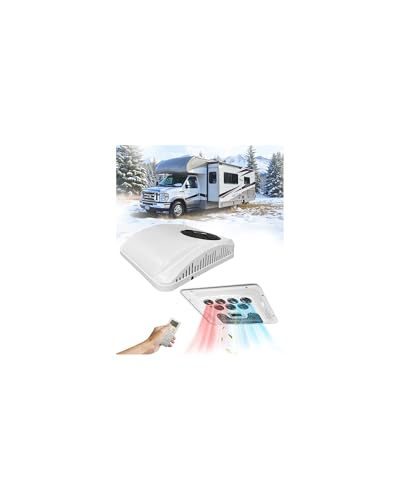
Features: A dual-function unit offering 7,900 BTU cooling and 3,000 BTU heating for all-season use. Powered by a 12V DC scroll compressor that taps into the vehicle battery, reducing fuel and generator usage. Noted for roof-mekey installation compatibility with standard skylight dimensions and space considerations for mounting on various RV roof sizes.
TOSOT 16,000 BTU Go Cool RV AC

Features: High-capacity cooling of 16,000 BTU with 12,500 BTU heating to accommodate larger RV spaces up to about 600 sq ft. Offers smart WiFi control via the Gree+ app for convenient temperature management. Designed for broad temperature tolerance, functioning across a wide outdoor range from 23°F to 115°F while maintaining indoor comfort settings.
Fogatti InstaCool 13,500 BTU RV AC
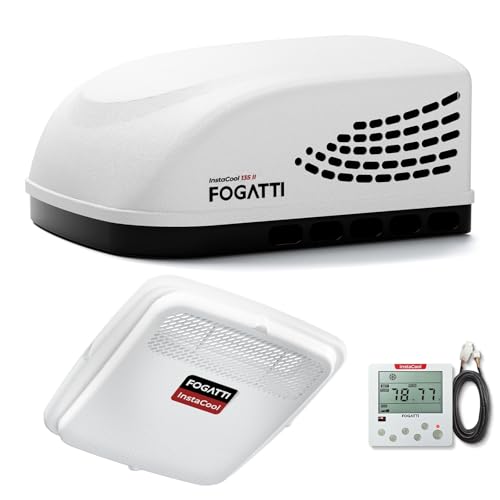
Features: All-in-one design with 13,500 BTU cooling under 115V AC power. Rapid cooling via dual high-efficiency compressors using eco-friendly R32 refrigerant. Emphasizes smart energy savings through advanced fan control and temperature regulation for efficient operation in RV environments. Designed for straightforward bolt-on installation with guidance provided.
Countrymod 10,000 BTU 12V DC RV A/C

Note: The Countrymod unit operates on a 12V DC system with inverter-compatible design, delivering 10,000 BTU cooling and 0.3 kWh per hour energy use. Utilizes variable frequency control to adjust compressor speed for on-demand cooling, offering extended battery life on long trips. Noise levels are kept low at 45-55 decibels, aiming for comfortable camper environments without disruptive airflow.
Buying Guide: Key Purchase Considerations for Rooftop RV A/C Units
- Power source and off-grid compatibility: Many 12V systems rely on RV batteries; evaluate battery capacity and inverter efficiency to meet cooling needs without excessive draw.
- BTU scale and space fit: Larger RVs typically need 12,000–16,000 BTU units, while smaller setups may suffice with 7,900–10,000 BTU. Measure roof space and consider ducted vs non-ducted configurations.
- Electrical requirements: 115V models require shore power or a generator; 12V models are better for off-grid but may have lower instantaneous cooling capacity.
- Installation considerations: Roof thickness, skylight dimensions, and mounting compatibility affect ease of installation. Look for bolt-on installation guides and included hardware.
- Durability and weather resistance: UV-stable plastics, corrosion-resistant condensers, and gasket reliability are important for outdoor operation in varying climates.
- Heater capabilities: Some units include integrated heating or heat pump features. Assess heating needs for shoulder seasons and winter camping.
- Smart features and control: WiFi or app-based controls offer convenient management, especially when away from the RV. Check compatibility with existing smart devices.
- Energy efficiency: Look for models with efficient compressors, low-noise operation, and refrigerant types with environmental considerations (such as R32).
- Maintenance and service support: Availability of replacement parts, ease of access for filter cleaning, and warranty terms influence long-term reliability.
- Noise levels: Quieter models improve comfort for sleeping areas. Compare decibel ratings when choosing units for bedrooms or bunks.