Best Space Heaters for Basement Warmth: Efficient Heating Solutions
Basements can stay chilly due to limited natural heat and high ceilings. The right space heater can deliver quick warmth, maintain a comfortable environment, and help manage energy use. Below are five top picks that balance rapid heating, safety features, and smart controls, each suited for basement use and larger spaces.
Summary of selected products
| Product | Brand | Key Benefit | Energy Features |
|---|---|---|---|
| Dreo Space Heater with Thermostat & Remote | Dreo | Rapid heat with smart controls | PTC ceramic, 1500W, 1℉ increments, 41–95℉ |
| Dreo 1500W with Oscillation & Remote | Dreo | Wide coverage & quiet operation | 270 sq.ft, 34dB, oscillation |
| Dreo 25″ High-Capacity Heater | Dreo | Large-room performance | 11.5 ft/s heat, 70° airflow |
| Lasko Digital Ceramic Tower | Lasko | Oscillation & remote control | 2 settings, timer, remote |
| FLANUR Smart Space Heater | FLANUR | Smart control & energy saving | WiFi/voice, 12h timer, ECO mode |
These options emphasize safety, steady warmth, and ease of use in basement environments, including features like tip-over protection, overheat protection, and energy-saving modes. Each product supports rapid heating, making them suitable for quick comfort during cold days or nights in a basement living area, workshop, or recreational room.
Dreo Space Heater With Thermostat And Remote

This Dreo model combines a powerful 1500W PTC ceramic heating system with a compact footprint ideal for basement spaces. Its heat funnel design projects warmth quickly and extends reach beyond traditional heaters. A tilt-detection sensor enhances tip-over protection, while V0 flame-retardant materials and overheat protection meet safety standards. The NTC chipset supports precise thermostat control, enabling 1℉ increments across 41–95℉ for energy-efficient comfort. The included remote and digital display simplify operation in a dim basement environment.
Dreo 1500W With 70° Oscillation

Designed for larger rooms, this Dreo heater delivers robust heating with 1500W PTC ceramic elements and 270 sq.ft. coverage. Safety is prioritized with ETL-certified materials, a built-in tip-over and overheat protection system, and a six-foot cord. A 12-hour timer helps avoid energy waste, and the quiet operation—around 34dB—allows basement living or workspaces to stay comfortable without disruptive noise. The product’s remote control adds convenience for use across a basement layout, including bedrooms or home offices.
Dreo 25-Inch High-Capacity Ceramic Heater

This 25-inch ceramic heater leverages Dreo’s hyperamics design for rapid warmth and a broader heat range. Quiet operation reaches low noise levels around 25dB, offering a comfortable environment for evenings or focused basement work. Safety features include a V0 flame-retardant exterior, reinforced plug, 45° tip-over protection, and ETL certification. A child lock adds an extra layer of safety for families using basement living spaces with kids.
Lasko Oscillating Digital Ceramic Tower
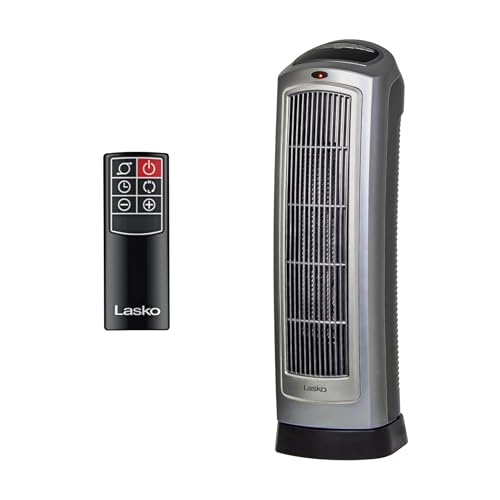
Offering two quiet heat settings and an adjustable thermostat, this Lasko tower heater distributes warmth evenly with optional oscillation. The remote control provides convenient operation from across a basement room, and a back-mounted remote storage keeps the control handy. A programmable auto-off timer from 1 to 8 hours helps manage energy and maintain a comfortable baseline temperature in a basement setting where heat needs can vary throughout the day.
FLANUR Smart Space Heater

FLANUR combines smart home compatibility with practical heating. Through an app, and compatible with Alexa and Google Home, this heater supports voice control and remote management. A 12-hour timer and ECO mode help optimize energy use, while 4 modes including 1500W ensure quick warmth and efficient operation in basements. The device uses V0 flame-retardant materials and includes overheat and tip-over protections, plus a child lock for family safety. WiFi control is limited to 2.4GHz networks, which is a common requirement for smart-home devices.
Buying Guide: Key Purchase Considerations For Basement Heating
Basement environments present unique heating challenges: cooler air pockets, larger open spaces, and sometimes damp conditions. When selecting a space heater for a basement, consider the following factors to ensure safe, efficient, and reliable operation.
- Heat output and coverage: For basements, choose models rated to handle larger areas (roughly 250–350 sq.ft. or more per unit). If you have a particularly large basement, you may want a heater with higher wattage (1200–1500W) and features like oscillation to distribute warmth evenly.
- Safety features: Look for tip-over protection, overheat protection, ETL or UL certification, and flame-retardant housings (V0). In homes with children or pets, a child lock and a sturdy base are valuable.
- Thermostat precision: A heater with an accurate thermostat (1℉ increments) helps maintain comfortable basements without overshooting temperatures, saving energy over time.
- Noise level: Quiet operation matters in basements that double as living spaces or bedrooms. Target models with noise in the 20–34dB range for unobtrusive warmth.
- Energy efficiency and modes: ECO or energy-saving modes adapt output to reach a target temperature, reducing electricity use during long basements sessions.
- Controls and convenience: Remote controls, digital displays, and smartphone integration (for smart heaters) offer ease of use in dim or awkward basement layouts. Ensure the control methods match your space usage and network capabilities.
- Durability and build: Basements can be more humid; choosing heaters with robust exterior materials and good IP or flame retardant ratings can improve longevity.
Operational considerations include placement away from walls or curtains to avoid restricting airflow, continuous running versus intermittent use, and the total energy consumption in a home heating plan. For basement zones that are regularly occupied, a heater with a robust safety system and consistent heat output is preferable. If you require smart scheduling, ensure your Wi‑Fi and router settings support reliable connectivity in the basement area.