Best Tankless Water Heaters for a Family of Five
For a household of five, a reliable tankless water heater can provide steady hot water on demand while saving space and energy. This guide highlights five strong options across electric and gas models, focusing on maximum flow, efficiency, and suitability for multi-fixture use. Each product offers different installation needs, from compact electric units to outdoor and indoor gas heaters. Use the buying guide below to compare specs, compatibility, and long-term performance for family-wide hot water comfort.
Summary of selected products:
| Product | Type | Approx. Max GPM | Key Benefit |
|---|---|---|---|
| EcoSmart ECO 11 | Electric | Up to 3.0–1.5 GPM (depends on inlet temp) | Compact, self-modulating, space-saving |
| Orbek 14kW Electric | Electric | Up to 3.38 GPM | LED display, 240V, good for 2–3 fixtures |
| Rinnai V53DeP | Propane Gas | 5.3 GPM | Outdoor installation, steady multi-point hot water |
| MIZUDO Gen 2 Outdoor | Propane Gas | 5.1 GPM | Self-modulating temp, efficient for large homes |
| MIZUDO Indoor Propane | Propane Gas | 4.3 GPM | Indoor, 2–3 fixtures, strong efficiency |
EcoSmart ECO 11 Electric Tankless Water Heater

Type: Electric. Power rating: 13 kW at 240 volts. Features patented self-modulating technology that adjusts heat output to demand. The unit is 90% smaller than traditional tank heaters and can be wall-mounted or used at point of use. It is designed for energy efficiency, heating water only when called. This model is suited for homes with modest simultaneous hot water needs and limited space.
14kW Tankless Water Heater Electric, Orbek

Type: Electric. 240V, 60A two-pole breaker required. Provides up to 3.38 GPM for simultaneous use at 2–3 points. Emphasizes high energy efficiency by separating water and electricity to minimize scale and corrosion, with fast hot water delivery (about 3 seconds) and potential electricity savings compared to tank heaters.
Rinnai V53DeP Propane Tankless Water Heater
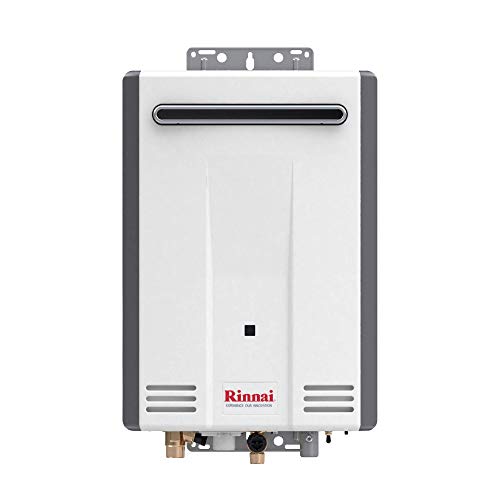
Type: Propane gas outdoor unit. Delivers 5.3 GPM to supply multiple appliances, with energy-efficient operation by heating water on demand. Its compact outdoor design saves indoor space while providing reliable hot water flow for busy households. Includes enhanced scale detection features for longevity.
MIZUDO Gen 2 Outdoor Propane Tankless Water Heater

Type: Outdoor propane. Delivers up to 5.1 GPM at 120,000 BTU. Features self-modulating temperature control to keep water within ±1°F, reducing energy waste and avoiding temperature shocks. UL listed and CSA certified, with a 2-year unit warranty and 5-year heat exchanger coverage.
MIZUDO Indoor Propane Tankless Water Heater

Type: Indoor propane unit. Delivers up to 4.3 GPM at 100,000 BTU. Self-modulating temp control with an oxygen-free copper heat exchanger. Suitable for 2–3 fixtures, offering energy-efficient operation with 2-year full-unit coverage and 5-year heat exchanger protection.
MIZUDO Propane Indoor Tankless Hot Water Heater (Gen 2)

Type: Propane indoor. Delivers up to 5.1 GPM with 120,000 BTU input and self-modulating temperature control that keeps outlet temperature stable within ±1°F. Designed for 2–3 fixtures, with efficient usage and UL/CSA safety certifications. Includes a 2-year unit warranty plus 5-year heat exchanger coverage.
Buying Guide: Key Purchase Considerations
- Fuel type and installation: Gas models (propane/natural gas) require venting and durable outdoor or indoor placement, while electric models are simpler to install in many homes but may require dedicated circuits and space constraints.
- Flow rate requirements: A family of five typically benefits from higher GPM (gallons per minute) ratings to support multiple fixtures simultaneously—shower, faucet, and dishwasher—without a temperature drop.
- inlet water temperature: In colder climates, incoming water is cooler, reducing effective GPM. Choose a unit with a higher BTU rating or GPM for your climate zone.
- Energy efficiency: Self-modulating technology and heat exchangers reduce standby losses and energy use. Look for units that heat water only on demand and avoid standby power use.
- Space and installation: Indoor vs. outdoor placement affects accessibility for service and maintenance. Compact electric units save space; outdoor gas units save indoor space but require proper venting and weatherproofing.
- Warranty and service life: Longer warranties on heat exchangers and full-unit coverage indicate durable construction. Check local service availability for gas and electric units.
- Electrical requirements (electric models): Ensure your home’s electrical system can handle the dedicated circuit and breaker size (for example, 240V with appropriate amperage).
- Safety and certifications: Look for UL/CSA listings and compliance with local codes. Gas models should have necessary venting and combustion safety features.
When selecting a tankless water heater for a family of five, balance flow needs with installation constraints and ongoing energy costs. Gas models often provide higher flow for simultaneous multi-fixture use, while electric models may be easier to install in smaller homes or apartments. Consider a model with self-modulating capabilities and robust warranties to ensure dependable hot water across peak usage periods.