Best Water Softener for Homes: Top Systems for Your Home
Finding the right home water softener involves balancing capacity, efficiency, and ease of maintenance. The following five systems are among the best options for American households seeking softer water, reduced mineral buildup, and better overall water quality. Each product below is evaluated for home use, with attention to bathroom and appliance protection, filtration capabilities, and smart or efficient design features.
Summary of chosen products
| Product | Capacity (Grains) | Head Type / Control | Key Benefit | Approx. Bathrooms / Household Size |
|---|---|---|---|---|
| Aquasure Harmony 48,000 | 48,000 | Digital Metered | Ideal for 3–4 bathrooms; strong filtration pre-filter | 3–4 baths |
| Aquasure Harmony 50,000 | 50,000 | Automatic Digital Metered | Great for 4–6 bathrooms; efficient mineral removal | 4–6 baths |
| Kenmore 350 | — | IntelliSoft AI softener | Smart regeneration; lower salt use | 1–4 people |
| Aquasure Harmony 32,000 | 32,000 | Digital Metered | Compact option for smaller homes; appliance protection | 1–2 baths |
| DuraWater Fleck 5600 SXT | 48,000 | Fleck 5600 SXT digital metered | High-capacity resin preloaded; solid performance | 3–4 baths |
Aquasure Harmony 48,000 Grains Whole House Softener

Aquasure Harmony 48,000 provides a reliable level of hardness reduction for homes with 3–4 bathrooms. Its high-efficiency digital metered control head optimizes regeneration based on actual water use, reducing salt and water waste. The triple-purpose pre-filter (sediment, carbon, zinc) targets common contaminants, improving taste and odor while protecting plumbing and appliances from scale buildup. This model emphasizes comprehensive protection for washing machines, dishwashers, water heaters, and other fixtures.
Aquasure Harmony 50,000 Grains Whole House Softener

Designed for mid-to-large homes, the Harmony 50,000 delivers robust hardness reduction for 4–6 bathrooms. Its triple-purpose pre-filter removes a broad range of contaminants, including chlorine, VOCs, and unpleasant tastes or odors, contributing to safer, cleaner water throughout the house. By protecting appliances from scale and reducing mineral buildup, this unit supports longer appliance lifespans and easier maintenance for kitchen and laundry tasks alike.
Kenmore 350 Water Softener

Kenmore 350 is suitable for households of 1–4 people and focuses on reducing hard minerals while diminishing clear water iron. Its IntelliSoft AI technology tailors regeneration to your family’s water use, potentially lowering salt consumption by as much as 40%. The system prioritizes softer hair and skin, brighter laundry, and reduced mineral buildup, making it a balanced choice for smaller to mid-sized homes seeking efficient operation and smart optimization.
Aquasure Harmony 32,000 Grains
The Harmony 32,000 is a compact option suited for smaller homes or apartments with 1–2 bathrooms. It offers solid protection for appliances by reducing mineral buildup and softening water at the point of use. While it handles moderate hardness effectively, its smaller capacity makes it best suited for homes with lower water usage or limited space for installation.
DuraWater Fleck 5600 SXT 48,000
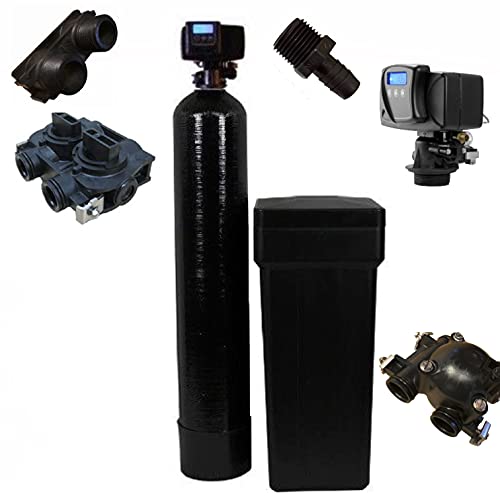
The Fleck 5600 SXT-based unit delivers 48,000 grains of hardness removal with a pre-loaded resin tank, ready for installation. It emphasizes on-demand digital metered regeneration, which can improve efficiency by regenerating in response to actual water usage. This model suits homes seeking a straightforward, high-capacity solution with dependable performance and a standard installation footprint.
Buying Guide: Key Purchase Considerations
- Household size and water hardness: Choose capacity based on occupancy and average hardness levels. Larger homes or higher hardness benefit from 40,000–60,000 grain units, while smaller homes can use 20,000–32,000 grain models.
- Control head and efficiency: Digital metered controls optimize salt and water usage by regenerating only as needed, reducing operating costs and waste.
- Filtration and pre-treatment: Models with integrated pre-filters or filtration stages (sediment, carbon) improve water taste, odor, and contaminant removal. Consider additional filtration if your water supply has chlorine, VOCs, PFAS, or iron.
- Appliance protection: Softeners that minimize mineral buildup extend the life of water heaters, dishwashers, washing machines, and piping.
- Installation space and form factor: Compact or smaller-capacity systems fit tight spaces, while larger units require dedicated room or utility access.
- Smart features and maintenance: AI-assisted regeneration or low-salt modes improve efficiency. Check for salt efficiency (pounds of salt per regeneration) and ease of salt refill.
- Salt type and availability: Some systems are compatible with traditional salt pellets; salt-free alternatives exist but do not soften hardness and provide different scale prevention benefits.
- Warranty and support: A solid warranty and accessible customer support help with parts, service, and optional maintenance plans.
Additional Considerations
Water softeners are designed to address mineral hardness, but not all products soften water in the same way. Salt-based systems remove minerals to reduce scale, while salt-free descalers may alter mineral behavior without removing hardness. For households with moderate to high hardness, salt-based units usually provide more predictable softening and longer equipment life. Always verify local water quality and consult a professional if uncertain about system selection or installation requirements.
Installation and Maintenance Tips
Plan for professional installation if required by building codes or if space is limited. Routine maintenance includes checking salt levels, inspecting brine tanks, and scheduling periodic resin bed cleaning or backwashing as recommended by the manufacturer. Regularly test water hardness after installation to ensure the system operates within desired ranges and adjust regeneration settings if necessary.